Sunday, August 7, 2016

REVIEW: The Dinosaur Lords by Victor Milan (DNF)

Star Rating: ** 2/5


Author: Victor Milan
Genre: Fantasy
Subgenre: High Fantasy (of the GoT type, not LotR. No Chosen Ones here.)
Review by Silicon.

DNF: 350 pages read. This review is not gentle.
A world made by the Eight Creators on which to play out their games of passion and power, Paradise is a sprawling, diverse, often brutal place. Men and women live on Paradise as do dogs, cats, ferrets, goats, and horses. But dinosaurs predominate: wildlife, monsters, beasts of burden – and of war. Colossal planteaters like Brachiosaurus; terrifying meateaters like Allosaurus and the most feared of all, Tyrannosaurus rex. Giant lizards swim warm seas. Birds (some with teeth) share the sky with flying reptiles that range in size from batsized insectivores to majestic and deadly Dragons.

Thus we are plunged into Victor Milán's splendidly weird world of The Dinosaur Lords, a place that for all purposes mirrors 14th century Europe with its dynastic rivalries, religious wars, and byzantine politics…and the weapons of choice are dinosaurs. Where we have vast armies of dinosaur-mounted knights engaged in battle. And during the course of one of these epic battles, the enigmatic mercenary Dinosaur Lord Karyl Bogomirsky is defeated through betrayal and left for dead. He wakes, naked, wounded, partially amnesiac – and hunted. And embarks upon a journey that will shake his world.

Intro


Guys, I tried.

I really wanted to like this book. I would have forgiven so much--overlooked so much--just because the premise amused me so. Knights. On. Dinosaurs. Dinosaur battles. The cover quote describes it as "a cross between Jurassic Park and Game of Thrones." How could it go wrong?

Well I'm going to tell you.

Setting


Imagine a typical European-based high fantasy setting. Medieval weaponry, feudal power structure, warring Kings, knights. Now add DINOSAURS. Awesome idea!

The one thing I'm really happy about with this book is that Milan goes all into its main selling point: the dinosaurs. Page 10 starts the first dinosaur battle of the book and IT DELIVERS. Milan does a pretty good job integrating dinosaurs into an otherwise-traditional Eurocentric High Fantasy setting. 

The entire first battle is excellent. There's several different types of dinosaurs (triceratops, hadrosaurs, allosaurus, T. Rex, just to name a few) in the battle, and each is deployed as per its unique strengths. The battle is well written and feels immediate, and there's some great war strategy involved that I really enjoyed. All two stars I gave this book are for the excellent inclusion of dinosaurs in a high fantasy setting. The dinosaurs feel integral, fundamentally a part of the land and culture.

Unfortunately, between the end of the first dinosaur battle and page 350 there are exactly 0 other dinosaur battles. The dinosaurs do show up throughout the book, but the focus is definitely not on them as the book proceeds past the first (and so far, only) major battle.

Characters


Ah characters, the most crucial element to any reader's appreciation of a book.

There are three major PoV characters: Melodia, Jaume, and Rob. Basically by page 350 I was rooting for assassins to murder all of them.

Melodia is a classic Mary Sue. She's a Princess of Spaña, beautiful and desired by everyone, idolizes her lover Jaume, and basically just spends all her time thinking about getting laid and ignoring gossip. (She's not like the other girls! Who are smart and PAY ATTENTION TO COURT POLITICS.). Melodia reportedly has deeply studied warfare but is basically patted on the head by Jaume on all occasions where she tries to have an opinion. By page 350 I would be hard pressed to name a single skill Melodia displays. She's just an ORNAMENT. Dear authors: THIS. IS. NOT. HOW. YOU. WRITE. WOMEN. Especially if you only have ONE important female character.

Jaume the [string of explicatives] warrior is impossibly handsome, never defeated in battle, endlessly patient, wonderfully righteous, and probably takes care of baby animals in his spare time. You know how in high school movies, if the scriptwriters want you to instantly feel sympathy for a character, they show another character drop all their books and the Character of Goodness stops and helps them pick them up? Just imagine incidents like this occurring every Jaume chapter. The author clearly really wants us to like him.

In one notable scene he has a rapist & murderer hanged and is forced to defend his actions against the Other Corrupt Nobles, thus obviously showing the Reader how morally superior he is. Clearly we should all feel a deep gratefulness to him for this rather basic action on part of a medieval law enforcer. I particularly despise it when authors use this little trick--the rape & murder of other characters are just vehicles for us to see how GOOD Jaume is! He's like Jaime from GoT, if you remove literally every shade of moral greyness that makes him interesting. If it isn't obvious I am really on the side of this dude's eventual murderer.

Compared to the Impossibly Perfect Duo, my dislike of Rob and Karyl is rather tame. Karyl is merely irritating, one of those "I'm not gonna say anything because mysterious > sensible communication" types, who we are supposed to accept is a Brilliant Tactician and Commander just because we're told. Rob started out interesting--he is shown to be intelligent--but eventually just degrades into a whiny dude who's just perpetually fed up with Karyl.

I'm Not Done Ranting About Spaña


You know that thing where a fantasy culture is supposed to be so original and radical and boundary-smashing but then you read it and it's literally just young beautiful women wearing no clothes and constantly thinking about sex?

Yeah.

OK, so you've got a culture that's cool with wearing very little clothing. That's fine! There's many in our real world like that! But if people are USED to seeing more skin, people also don't tend to sexualize that skin. We don't think there's anything particularly amazing about ankles, but the Victorians would probably disagree. Hint hint, book.

What's screwed up is when it's only the young women who wear almost nothing. The older women, the men are considerably more clothed. Also, the hypersexualization of the women really sat ill with me. When you describe women's bodies in lingering detail but don't pay the same attention to the men, you've got a problem.

Political Intrigue


I love political intrigue in fantasy books! Usually.

I really did not care at all about any of the political manoeuvring in this novel at all. Could not give a shit. The author gives no reason for me to care about the politics of any nation. One of the major PoV characters, Melodia, herself frequently states she doesn't care at all for court politics, and she's a princess! Why should I?

The political manoeuvring is not really shown, it is told. Oh god the info-dumps in this novel. So many. The most notable one was immediately after the much-delayed sex scene, which I found completely ludicrous. So much name-dropping, "As you know, Bob"-style explanations, the main characters describing the map of the land to each other, reminding each other who hates whom, of old rebellions ... I honestly can't remember most of it because I skimmed the vast majority.

It didn't feel masterful or well-executed. When I read good political intrigue, I usually get the sense of a powerful intelligence observing and moving chess pieces behind the curtain. There was none of that here. Nothing particularly shocking happened either, as in the style of GoT reactionary style of politics. It was just ... I know the author did a lot of planning and worldbuilding and wanted to show the reader, but I just wasn't given a reason to care.

Plot


The vast majority of the plot revolves around the politics of Spaña, Melodia's love life, and Rob's irritation with Karyl. I think. The book may be called the Dinosaur Lords, but the main focus is on human politics. I was really hoping the dinosaurs would play a bigger part of this novel. As it is, it feels like the author tried to do a GoT-style politics-based plot but it didn't really work. I was hoping for more campy dinosaur battles, but it feels almost like the first dinosaur battle is bait to get you to read the following 300 pages of pretty standard human drama.

Given the fact that I didn't care about the politics, the plot was pretty boring.

Writing Style


I thought the writing style was pretty okay, for the most part. Not amazing, but not terrible. What killed me was the info-dumps. So many. So ill-concealed. I already ranted about this, so I won't repeat myself. It was pretty bad.

Also the dialogue. It was mostly okay, but then you get hit with gems like:
"He doesn't lust after my cinnamon-skinned young body, at least so far as I know."
I'm just going to let that stand alone.

Diversity


I'm not really sure if this book contains PoC or not, which is a bad sign. My confusion is mainly due to that "cinnamon-skinned" quote, which appears around pg 325. The cultures are essentially European. Which didn't surprise me, as the map is essentially Europe with slightly modified names. Still, even Europe didn't exist in an only-white people vacuum. But most Eurocentric fantasy does!

I was really not happy when one major character loses a hand, but conveniently gets it back via a Sorceress who has something to prove. Yet another example of how the fantasy genre is really not awesome with handling disability.   

One good point is the casual inclusion of bisexual, lesbian, and gay characters in the book, specifically in Spaña. Jaume is bisexual and polyamorous. This isn't shown to be a big deal or something that required special explanation. He just simply IS. There also doesn't appear to be any religious or cultural homophobia affecting society in this book.

Final Remarks


I wasn't expecting great literature, but I was expecting more than this. This novel falls in the depressingly large bin of books with amazing premises which suck at writing women. Among other issues. The nail in the coffin was definitely the way Melodia was handled.

It started off so great! But when Karyl takes a fall of a cliff, so does the quality of the book. I won't be finishing this, and unless I see evidence that this author has learned to write much better female characters I won't be picking anything up by him either. 

So disappointed.

Sunday, July 31, 2016

Diverse Detective Fiction

 
When I'm super busy or life is extra stressful, I tend to pick up an Agatha Christie rather than one of my many intense fantasy novels. They're quick, engaging, and don't generally destroy my emotions (a plus when life itself is busy destroying said emotions). Perfect light reading.

Yet when I look at my piles of detective novels, there's something very disappointing about them. They're all set primarily in Europe or America. Every detective is white. 

I want my pile of cozy mysteries to include detectives who aren't almost universally white men. After all, if we can have themed mysteries like Quilting Mysteries and Cat Mysteries and Maple Syrup Mysteries (yes really), then surely we can also have More Representative of The World We Live In Mysteries too?

So on Twitter, I asked if anyone had recommendations for more (specifically: racially) diverse mysteries.


And Twitter delivered. Here's some of the recommendations I got: many thanks to @Bina_ReadThis, @hemapen especially! If you've read any of these, please let me know what you thought!


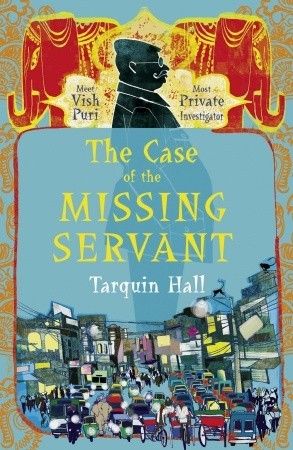
1. The Case of the Missing Servant (Vish Puri #1) by Tarquin Hall

The portly Vish Puri is India’s most accomplished detective, at least in his own estimation, and is also the hero of an irresistible new mystery series set in hot, dusty Delhi. Puri’s detective skills are old-fashioned in a Sherlock Holmesian way and a little out of sync with the tempo of the modern city, but Puri is clever and his methods work.

The Case of the Missing Servant shows Puri (“Chubby” to his friends) and his wonderfully nicknamed employees (among them, Handbrake, Flush, and Handcream) hired for two investigations. The first is into the background of a man surprisingly willing to wed a woman her father considers unmarriageable, and the second is into the disappearance six months earlier of a servant to a prominent Punjabi lawyer, a young woman known only as Mary.

The Most Private Investigator novels offer a delicious combination of ingenious stories, brilliant writing, sharp wit, and a vivid, unsentimental picture of contemporary India. And from the first to the last page run an affectionate humour and intelligent insights into both the subtleties of Indian culture and the mysteries of human behaviour.


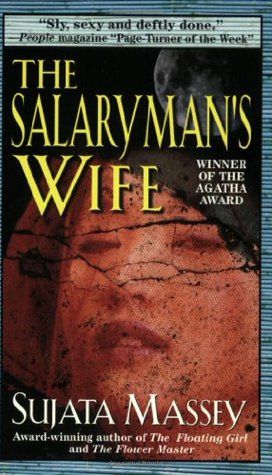
2. The Salaryman's Wife (Rei Shimura#1) by Sujata Massey

Japanese-American Rei Shimura is a 27-year-old English teacher living in one of Tokyo's seediest neighborhoods. She doesn't make much money, but she wouldn't go back home to California even if she had a free ticket (which, thanks to her parents, she does.) Her independence is threatened however, when a getaway to an ancient castle town is marred by murder.

Rei is the first to find the beautiful wife of a high-powered businessman, dead in the snow. Taking charge, as usual, Rei searches for clues by crashing a funeral, posing as a bar-girl, and somehow ending up pursued by police and paparazzi alike. In the meantime, she manages to piece together a strange, ever-changing puzzle—one that is built on lies and held together by years of sex and deception.


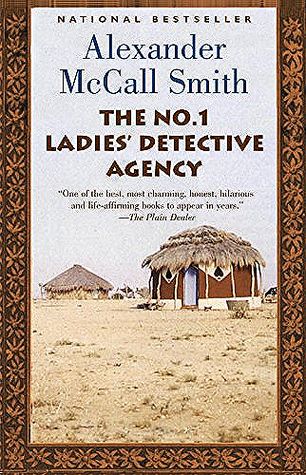
3. The No. 1 Ladies' Detective Agency (No. 1 Ladies' Detective Agency #1) by Alexander McCall Smith

Wayward daughters, missing husbands, philandering partners, curious conmen - If you've got a problem, and no one else can help you, then pay a visit to Precious Ramotswe, Botswana's only - and finest - female private detective, and her assistant, Mma Makutsi. Her methods may not be conventional, and her manner not exactly Miss Marple, but she's got warmth, wit and canny intuition on her side, not to mention Mr J.L.B. Matekoni, the charming proprietor of Tlokweng Road Speedy Motors. And Precious is going to need them all as she sets out on a series of cases that tumbles our heroine into a hotbed of strange situations and more than a little danger...

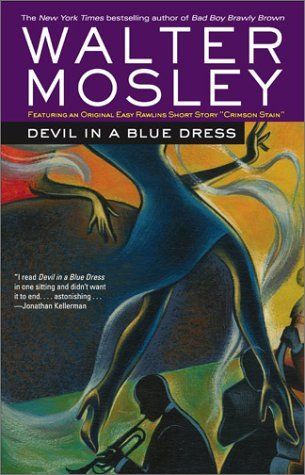
4. Devil in a Blue Dress (Easy Rawlins #1) by Walter Mosley

In Los Angeles of the late 1940s, Easy Rawlins, a black war veteran, has just been fired from his job at a defense plant. Easy is drinking in a friend's bar, wondering how he'll meet his mortgage, when a white man in a linen suit walks in, offering good money if Easy will simply locate Miss Daphne Monet, a blonde beauty known to frequent black jazz clubs.


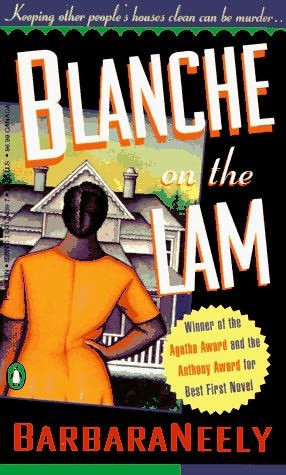
5. Blanche on the Lam (Blanche White #1) by Barbara Neely

Blanche White lends a refreshing African-American, female twist to the mystery tradition, as she turns from domestic worker to insightful--if reluctant--sleuth. A middle-aged housekeeper with a strong sense of humor, Blanche becomes an unlikely yet ingenious sleuth when murder disrupts the wealthy household of her employers.


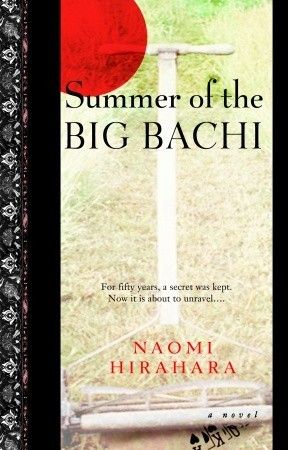
6. Summer of the Big Bachi (Mas Arai #1) by Naomi Hirahara

In the foothills of Pasadena, Mas Arai is just another Japanese-American gardener, his lawnmower blades clean and sharp, his truck carefully tuned. But while Mas keeps lawns neatly trimmed, his own life has gone to seed. His wife is dead. And his livelihood is falling into the hands of the men he once hired by the day. For Mas, a life of sin is catching up to him. And now bachi—the spirit of retribution—is knocking on his door.

It begins when a stranger comes around, asking questions about a nurseryman who once lived in Hiroshima, a man known as Joji Haneda. By the end of the summer, Joji will be dead and Mas’s own life will be in danger. For while Mas was building a life on the edge of the American dream, he has kept powerful secrets: about three friends long ago, about two lives entwined, and about what really happened when the bomb fell on Hiroshima in August 1945.

A spellbinding mystery played out from war-torn Japan to the rich tidewaters of L.A.’s multicultural landscape, this stunning debut novel weaves a powerful tale of family, loyalty, and the price of both survival and forgiveness.


7. Shinju (Sano Ichiro #1) by Laura Joh Rowland


When beautiful, wealthy Yukiko and low-born artist Noriyoshi are found drowned together in a shinju, or ritual double suicide, everyone believes the culprit was forbidden love. Everyone but newly appointed yoriki Sano Ichiro.

Despite the official verdict and warnings from his superiors, the shogun's Most Honorable Investigator of Events, Situations, and People suspects the deaths weren't just a tragedy; they were murder. Risking his family's good name and his own life, Sano will search for a killer across every level of society determined to find answers to a mystery no one wants solved. No one but Sano...

These recs are just the tip of the iceberg. 

Perhaps in the future I'll make some more specific lists of detective novels. This list is a big mix of racially diverse books, I'd love to break it down into more categories with more recs of course! Some ideas: detective novels by PoC authors, detective novels set in non-Western countries with local detectives, detective novels set in Western countries with PoC leads, etc. Can you tell I'm super excited?!

And I haven't even said anything about other axes of diversity than race--we need disabled detectives, LGBTQIA detectives too just to give a few examples!

I found this great list of detective novels with PoC leads:
Diverse Mysteries: Because People of Color Solve Mysteries Too (great title!).

Finally, The Book Smugglers tweeted a link to a Goodreads group focused on the sub-genre of Lesbian Mysteries!


What are your favorite diverse detective novels?

Monday, July 25, 2016

Writing Racism: Thoughts After Reading Sorcerer To the Crown by Zen Cho

It's funny how you don't realize you've been missing a thing until you actually GET it, you know?

Oftentimes, when I read books with PoC characters in a predominantly white society which have been written by white authors, I feel something is "off" about them, but can't always put it into words.  Even when at a surface level it seems okay, something is just missing that I know to be true in my experiences.

Recently I read Zen Cho's Sorcerer to the Crown and realized what it was I keep missing. Microaggressions.

That's too simplistic an answer. Let's start from the beginning.

In my experience, there are levels of awareness to marginalized experience. Here, I'm talking about racism specifically. Level One is Racism Is Bad. No, scratch that. Level One is Racism Exists (sad that some people aren't even at this level).

Level Two: Racism is Bad
Level Three: Racism is Everywhere
Level Four: Racism is Integrated In Our Society
Level Five: Even Good People Can Be Racist
Level Six: We Need To Believe Actual Marginalized People
Level Seven: Microaggressions Exist
Level Eight: Non Marginalized People Need To Sit Down And Let Marginalized People Lead The Conversation
...
etc. Actually I'm getting a bit hazy on the ordering here but this will do.

Those of us who are lucky enough to experience racism firsthand whiz past this shit because our lives ARE the marginalized experience. Of course, that's not to say that if a marginalized person writes a book with racism that said book represents is THE ONE TRUE EXPERIENCE or anything.

What I tend to see in books written by non-marginalized people is between Level 2 to Level 4 awareness.

I see books include a character of color who is shown to face major aggressions--people outright claiming they're lesser or incapable, being called slurs, pointedly ignored, bullied, beaten up, etc. I see the main character--nearly always white--recognize their true humanity and indignantly can't understand why everyone else treats them different. They become friends and the main character learns about racism and is horrified. Maybe the main character shouts down a bully or rants about the unfairness of society.

Okay, fine--glad the book shows at least this amount of basic awareness. These kinds of racist acts are of course real, of course experienced by many of us, and of course affect the way we move through society. But these are very much performative, intentional racist acts. That's only one facet of racism. Having ONLY the intentional type of racism present--especially if only "bad guys" demonstrate it--is showing only a small part of our experiences. This is really the most basic form of racism. 

There's another--inherent, insidious, tightly bound even within the breasts of people who consider themselves aware. This is inherent bias, this is unconscious aversion, this is unintentional harm. Yes, even "good" people can be racist. Even your friend can harbor a subconscious belief that you are somehow lesser. Even your advocates can be disinclined to listen to you because their voice is echoed back to them in confirmation again and again and again while yours is small and alone.

Where's the plethora of tiny needles that prick daily from not just your enemies, but also your friends? These are microaggressions. In many ways they affect my life even more than those idiots who occasionally yell that I should go back where I came from. The friend who casually asks offensive questions and doesn't get why I'm withdrawn afterwards is not as easy to dismiss as the random dude shouting his head off on the sidewalk.

Books by non-marginalized authors rarely show that good people, people on YOUR side, can harbor racist thoughts and beliefs. If they do, they usually end up redeemed in some way by the end--they understand that black people are just as human as they are and POOF! Problem solved! Everyone's happy! Of course it doesn't work that way. There isn't an internal switch which you can just flip and suddenly be 100% aware.

I dislike when it feels that the author is just using the character of color as a vehicle to showcase how bad the Bad Guys are. These are the Bad Guys, Reader! Look, they're racist! How horrible!

Even worse, when a book uses the character of color as a vehicle to showcase the main character's Goodness. Look, Reader, even though the entire society she's grown up in says these people are bad, she doesn't believe a word of it! Look how nice she is to the character of color! How wonderful!

When universally the Good people show no racism and the Bad people show buckets of it, we have a problem, and that problem is that it's not very realistic. It doesn't ring true. Not all my friends "get" racism, and not all my (fortunately, rather few) enemies are horrific racists. If you haven't grown up with it, you're GOING to make mistakes. You're going to say hurtful things. Even if you're a Good Guy.

Zen Cho's novel has two main characters of color whose experiences ring beautifully true to my ear. Zacharias and Prunella don't just have overt, violent acts of racism to handle, but also insidious, harmful pricks from friends and enemies alike.

The mentor Sir Stephan is an advocate for Zacharias his whole life, despite the difficulty of convincing a very white, powerful group that a black man is equally--even MORE--competent than they. Yet he is not perfect. He sees magical potential in the boy Zacharias and buys him from a slave ship--but doesn't buy his parents, on the same slave ship. Imagine growing up under the tutelage of such a mentor, the conflicting feelings you would have for him. Cho explicitly shows this with the quote:

It had been impossible to ask these questions of Sir Stephen or Lady Wythe, whose affection could not be doubted. That Zacharias's own love for them was leavened with anger was best left unsaid; he tried not to know it himself.

For despite his many good qualities, it doesn't appear the mentor really ever thinks deeply about his early action during his life.

Similarily, Prunella's guardian and boss seems to appreciate her, but is quick to demote her upon the unfounded complaint of a wealthy, white woman. In her mind, Prunella deserves the servant's quarters--after all, she's not really English.

Other examples in the book abound, such as Lady Wythe's indignation at any overt slight paid to Zacharias, while he himself merely continues on with the weary knowledge that such a slight was not the first, will not be the last, and the pricks of a thousand more left unsaid are his burden to carry.

The ease with which the other magicians accept a violent, horrific plot to remove Zacharias from his position of power is bourne from their internal belief that he is somehow lesser, undeserving.

The silent endurance Zacharias exhibits towards barbs both overt and sly, the way Prunella bites her tongue against unsaid words despite internal feelings of betrayal in order to mitigate harm done to her undeservedly--in such ways Zen Cho speaks to a more complete picture of navigating a racist society as a PoC.

The sense I get from books by many non-marginalized authors who try to tackle racism is that, in their world, racism is bad and a lot of people are racists and THOSE people are bad. The sense I get from Cho's novel is that racism is pervasive. (And bad, of course. That goes without saying here).

People can be on your side in one way, and not in another. Friends may not understand. Advocates can do and say things that are hurtful and problematic. And always, the greatest burden is on YOU, the person of color, the person who gets to deal with this shit whether people believe you or not. But it doesn't mean you don't get to have a life, find love, achieve positions of power, and even have fun and joy and whimsical escapades just like everyone else.

I really appreciate Zen Cho for explicitly making this subject a part of her novel and her character's struggles in a book that is very much a lighthearted, whimsical story. It adds an important layer of depth and truth to the story. To not include racism both explicit and implicit would have been to ignore a key facet to the characters' experiences in the world.

If you don't experience racism firsthand, it's a long journey to understand how deep the insinuating tentacles of racism are in our society, and how they color our experiences in ways that are hard to even put into words.

That's not to say "don't try." Please, try! I'm a proponent of the view that writing (and reading!) diverse perspectives of people different from you encourage empathy within yourself, if you try hard and do research and listen.

The key word here being LISTEN. Try to level up, okay?

Sunday, July 17, 2016

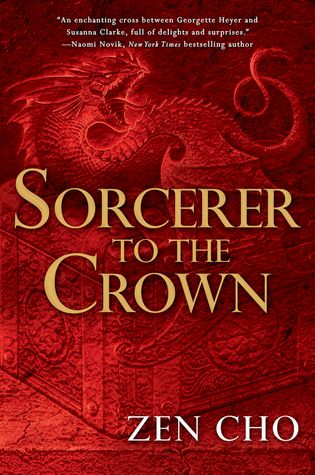
REVIEW: Sorcerer to the Crown by Zen Cho

Star Rating: **** 4/5 


Title: Sorcerer to the Crown
Author: Zen Cho
Genre: Fantasy
Subgenre: Magical Regency England (I admit I don't actually know what this subgenre is called ... )
Review by Silicon.
Magic and mayhem collide with the British elite in this whimsical and sparkling debut.

At his wit’s end, Zacharias Wythe, freed slave, eminently proficient magician, and Sorcerer Royal of the Unnatural Philosophers—one of the most respected organizations throughout all of Britain—ventures to the border of Fairyland to discover why England’s magical stocks are drying up.


But when his adventure brings him in contact with a most unusual comrade, a woman with immense power and an unfathomable gift, he sets on a path which will alter the nature of sorcery in all of Britain—and the world at large…

Intro


This was the first book in the Diverse SFF Book Club (#DSFFBookClub on twitter, join us!).

This is a Regency England setting with magic! Every now and then I get a hankering for some good high society magical England novels, and this book absolutely fits the bill. However, there is one little difference between those books and this one:

DIVERSE CHARACTERS.

(I was gonna hit the CAPSLOCK button sometime ...)

Characters


Our mains are Zacharias, a black man, and Prunella, a half-Indian woman. In a Regency England setting! Tell me, when have you read a Regency or Victorian England book with even ONE non-white character. Go on, I'll wait. (Gail Carriger's Finishing School has one black boy, but to me he's always felt very much a token ... a discussion for another post).

Cho writes the realities of being a PoC in a predominately white society excellently--both Zacharias' and Prunella's experiences really ring true. Both Zacharias and Prunella regularly have to deal with racist mindsets from people around them--sometimes even people on their side. I've now written a whole damn post on this topic so stay tuned for when that comes out! I really enjoyed reading a PoC perspective on this era in English history.

(BTW, take a look at the twitter account @medievalpoc. I love it. ACTUAL IMAGES of PoC in medieval times! In Europe, even!)

Cho also doesn't hesitate in exposing the sexism of society and how it affects her characters. Prunella, of course, is fully cognizant of the limitations society places on her--and her response it to reach in, grab, and twist society to MAKE her a place. She's determined, resourceful, and knows what she wants and isn't afraid to upset society's apple cart to get it!

As a contrast, Zacharias is a calm and thoughtful character determined to work for society's good despite his colleagues' rejection of him. He faces some of the worst machinations of the antagonists, and yet persists in doing his duty to the fullest extent.

I loved Zacharias' and Prunella's conversations that show how different their worldviews are.

Cho also includes a woman who, in my mind, is in a tight race with Prunella to be my favorite character. Mak Genggang, a Malaysian magician who wreaks havoc in London (both intentionally and unintentionally)! I loved her friendship with Prunella. She's definitely someone I'd want on MY side!

Plot


England's magical stocks are drying up, and the English Magicians are pissed. The task falls to Zacharias, Sorcerer Royal, to solve why. But his enemies are numerous and many hope for him to take a fall--even fatally.

Prunella is a woman with an astounding magical gift, and barely a friend in the world. Left bereft of protection yet possessing a secret of great magical value, she is determined to use her power to turn her situation around and secure for herself a place in a society that doesn't want her.

What happens when they meet?

The plot is not fast paced but not glacial either. There are several aspects to the political conundrum the characters face which come to light throughout the book, it's not a simple antagonist they face, and the problem isn't one-sided. However I did not feel particularly surprised by any twist save the viciousness of the other magicians.

I also felt some of the solutions were just a tad too neat for my twisty brain. While I enjoyed the magic system, a lot of it was hidden in academic language that is unexplained: such as obtuse spell names after people long dead. For me, it made it harder to really assess what the limits of magical power really were.

I was very pleased with the ending. NO SPOILERS. (And by now I hope you all know I can be very pleased with either a tragic or a happy ending so YOU KNOW NOTHING, JON SNOW *coughs*).

Writing Style


This book's style is marked by a beautiful use of language reminiscent of Jane Austen (I haven't read Heyer myself, but Cho was inspired by her novels!), very precise and absolutely period-perfect to my ear. Cho doesn't break voice even once, absolutely no modern phrases or anachronisms! Lots of snarky dialogue with double meanings, swift retorts, and imaginative metaphors! I adore snark, so I had a lot of fun reading along, especially with Prunella's conversations. The dialogues are insightful, deep, but also funny, bantering, and intelligent!


Magic System


I enjoyed the magic system--it's very scholarly in general, but with inclusion of familiars, magical artifacts, and capricious fairies. I liked the double-edged nature of the familiars a lot--beneficial, yes, but at what cost! It was really interesting to have a magic system where magic is inborn, but suppressed by society in women while encouraged in men. The magic school for girls shown in the beginning of the book shows how magic can be turned to harmful to the user, intentionally so. It was an interesting take on a naturally magical society.


Final Remarks


You may think that with all the "heavy" subjects I've mentioned that this is a dense brick of a novel. Not true. The story is very much in the style of magical Regency settings--lighthearted, whimsical, funny. That Cho is unafraid to include experiences of racism & sexism in such a novel is something I greatly appreciated. Yes, your characters can experience microaggressions but also have whimsical, funny magical escapades. This is not a heavy book at all.

I really enjoyed this novel and would HIGHLY recommend it to anyone who is fond of:

Sorcery & Cecilia by
Gail Carriger's Finishing School series (Book 1: Etiquette and Espionage)
Jane Austen
Georgette Heyer

Join in the discussion on Twitter using the #DSFFBookClub hashtag! 

Wednesday, June 1, 2016

The Diverse Books Tag!


I'm super excited to take part in this tag created by Naz @ Read Diverse Books!

I'm making this whole thing into a TBR pile enhancer. So none of these books are books I've read before (and yes, it's extremely painful to not shout about some of my favs!).

My mission in this tag was to find an SFF book for every single challenge. And I wanted to see if I could do it without adding YA SFF (which is really doing amazing things now! Seriously I would find like 3 diverse YA books to every 1 adult book when I was hunting around). Adult SFF is my favorite genre. Doing this tag has really helped me diversify my TBR pile in ways I didn't realize it was lacking before!

I decided to avoid short stories and novellas, and have as many #ownvoices authors as I could find.

I think I succeeded pretty well! I found a lot of books that sound amazing. Overall I'm glad I decided to only list books I haven't read before--now my TBR is exploding!

If you've read one or more of the books on this list, let me know what you thought!

1. Find a book starring a lesbian character.


  • Here I found 2 awesome scifi books that I just couldn't pick between! The main characters of both just sound SO badass.


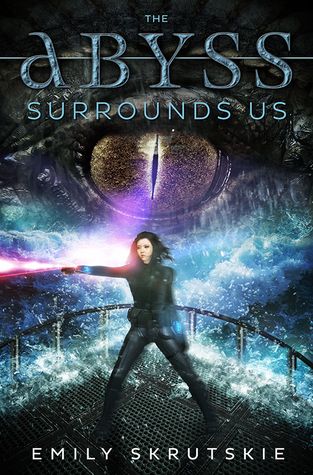
The Abyss Surrounds Us by Emily Skrutskie


For Cassandra Leung, bossing around sea monsters is just the family business. She’s been a Reckoner trainer-in-training ever since she could walk, raising the genetically-engineered beasts to defend ships as they cross the pirate-infested NeoPacific. But when the pirate queen Santa Elena swoops in on Cas’s first solo mission and snatches her from the bloodstained decks, Cas’s dream of being a full-time trainer seems dead in the water.

There’s no time to mourn. Waiting for her on the pirate ship is an unhatched Reckoner pup. Santa Elena wants to take back the seas with a monster of her own, and she needs a proper trainer to do it. She orders Cas to raise the pup, make sure he imprints on her ship, and, when the time comes, teach him to fight for the pirates. If Cas fails, her blood will be the next to paint the sea.

But Cas has fought pirates her entire life. And she's not about to stop.


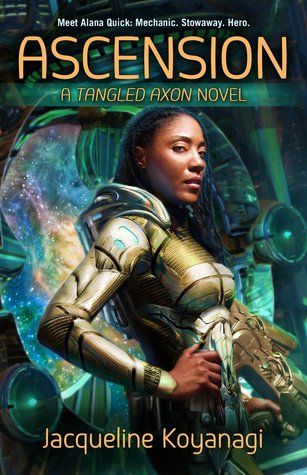
   Ascension by Jacqueline Koyanagi 


Alana Quick is the best damned sky surgeon in Heliodor City, but repairing starship engines barely pays the bills. When the desperate crew of a cargo vessel stops by her shipyard looking for her spiritually advanced sister Nova, Alana stows away. Maybe her boldness will land her a long-term gig on the crew. But the Tangled Axon proves to be more than star-watching and plasma coils. The chief engineer thinks he's a wolf. The pilot fades in and out of existence. The captain is all blond hair, boots, and ego . . . and Alana can't keep her eyes off her. But there's little time for romance: Nova's in danger and someone will do anything--even destroying planets--to get their hands on her.

2. Find a book with a Muslim protagonist.

  • Okay, this sounds AMAZING. Super different than a lot of fantasy I've read before!
  • I would have loved to find more Islamic Scifi, but I found it difficult to find books with good rep. Would love some suggestions!


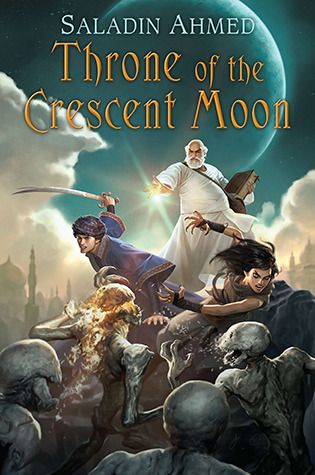
Throne of the Crescent Moon by Saladin Ahmed


The Crescent Moon Kingdoms, home to djenn and ghuls, holy warriors and heretics, are at the boiling point of a power struggle between the iron-fisted Khalif and the mysterious master thief known as the Falcon Prince. In the midst of this brewing rebellion a series of brutal supernatural murders strikes at the heart of the Kingdoms. It is up to a handful of heroes to learn the truth behind these killings.

Doctor Adoulla Makhslood, “the last real ghul hunter in the great city of Dhamsawaat,” just wants a quiet cup of tea. Three score and more years old, he has grown weary of hunting monsters and saving lives, and is more than ready to retire from his dangerous and demanding vocation. But when an old flame’s family is murdered, Adoulla is drawn back to the hunter’s path.

Raseed bas Raseed, Adoulla’s young assistant, is a hidebound holy warrior whose prowess is matched only by his piety. But even as Raseed’s sword is tested by ghuls and manjackals, his soul is tested when he and Adoulla cross paths with the tribeswoman Zamia.

Zamia Badawi, Protector of the Band, has been gifted with the near-mythical power of the lion-shape, but shunned by her people for daring to take up a man’s title. She lives only to avenge her father’s death. Until she learns that Adoulla and his allies also hunt her father’s killer. Until she meets Raseed.

When they learn that the murders and the Falcon Prince’s brewing revolution are connected, the companions must race against time—and struggle against their own misgivings—to save the life of a vicious despot. In so doing they discover a plot for the Throne of the Crescent Moon that threatens to turn Dhamsawaat, and the world itself, into a blood-soaked ruin.

3. Find a book set in Latin America.

  • This category was difficult for me ... I wanted to stay away from magical realism, which is a rich and well-known genre, and see if I could find some pure SFF books. So I've got two books here, one a fantasy based on the Aztec Empire, and the second a collection of SFF short stories by Latin American writers!


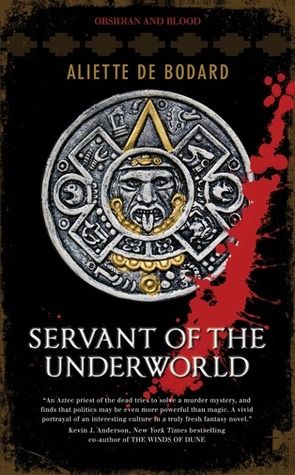
Servant of the Underworld by Aliette De Bodard


Year One-Knife, Tenochtitlan the capital of the Aztecs. The end of the world is kept at bay only by the magic of human sacrifice. A Priestess disappears from an empty room drenched in blood. Acatl, High Priest, must find her, or break the boundaries between the worlds of the living and the dead.

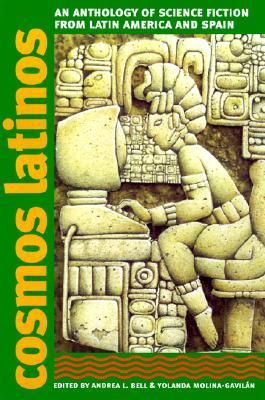
Cosmos Latinos: An Anthology of Science Fiction from Latin America and Spain - See more at: http://www.blackpast.org/bibliography/cosmos-latinos-anthology-science-fiction-latin-america-and-spain#sthash.vtns4aaB.dpuf


Cosmos Latinos edited by Andrea L. Bell & Yolanda Molina-Gavilan


Opening a window onto a fascinating new world for English-speaking readers, this anthology offers popular and influential stories from over ten countries, chronologically ranging from 1862 to the present. Latin American and Spanish science fiction shares many thematic and stylistic elements with anglophone science fiction, but there are important differences: many downplay scientific plausibility, and others show the influence of the region's celebrated literary fantastic. In the 27 stories included in this anthology, a 16th-century conquistador is re-envisioned as a cosmonaut, Mexican factory workers receive pleasure-giving bio-implants, and warring bands of terrorists travel through time attempting to reverse the outcome of historical events. 

The introduction examines the ways the genre has developed in Latin America and Spain since the 1700s and studies science fiction as a means of defamiliarizing, and then critiquing, regional culture, history and politics--especially in times of censorship and political repression. The volume also includes a brief introduction to each story and its author, and an extensive bibliography of primary and secondary works. Cosmos Latinos is a critical contribution to Latin American, Spanish, popular culture and science fiction studies and will be stimulating reading for anyone who likes a good story.

4. Find a book about a person with a disability.

  • I definitely didn't want to have a book here which "fixes" the protagonist's disability with magic/advanced tech/etc. And it's painfully difficult to find one where the protagonist isn't "fixed" in some way. I would love more recommendations for this category!


The Ill-Made Mute by Cecilia Dart-Thornton


This first title in a new trilogy, set in a world of legendary creatures, introduces the least of the lowly--a mute, scarred foundling, unaware of who she is or why she is wandering the dangerous landscape. Fortunately, an old female servant takes her in and protects her. As she grows, she finds friends in this strange land, and together, they set out to find her name, her past, and her future.

5. Find a Science-Fiction or Fantasy book with a POC protagonist.

  • Oh hell yes, my favorite genre plus PoC protags! I couldn't pick (again), so here are two books I've been DYING to read!


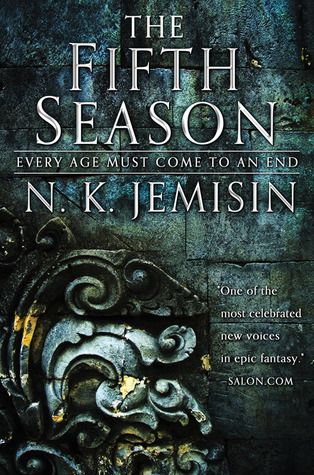
The Fifth Season by N.K. Jemisin


This is the way the world ends. Again.

Three terrible things happen in a single day. Essun, a woman living an ordinary life in a small town, comes home to find that her husband has brutally murdered their son and kidnapped their daughter. Meanwhile, mighty Sanze -- the world-spanning empire whose innovations have been civilization's bedrock for a thousand years -- collapses as most of its citizens are murdered to serve a madman's vengeance. And worst of all, across the heart of the vast continent known as the Stillness, a great red rift has been torn into the heart of the earth, spewing ash enough to darken the sky for years. Or centuries.

Now Essun must pursue the wreckage of her family through a deadly, dying land. Without sunlight, clean water, or arable land, and with limited stockpiles of supplies, there will be war all across the Stillness: a battle royale of nations not for power or territory, but simply for the basic resources necessary to get through the long dark night. Essun does not care if the world falls apart around her. She'll break it herself, if she must, to save her daughter.


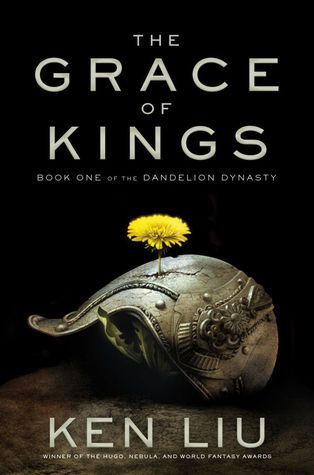
The Grace of Kings by Ken Liu


Two men rebel together against tyranny—and then become rivals—in this first sweeping book of an epic fantasy series from Ken Liu, recipient of Hugo, Nebula, and World Fantasy awards.

Wily, charming Kuni Garu, a bandit, and stern, fearless Mata Zyndu, the son of a deposed duke, seem like polar opposites. Yet, in the uprising against the emperor, the two quickly become the best of friends after a series of adventures fighting against vast conscripted armies, silk-draped airships, and shapeshifting gods. Once the emperor has been overthrown, however, they each find themselves the leader of separate factions—two sides with very different ideas about how the world should be run and the meaning of justice.

Fans of intrigue, intimate plots, and action will find a new series to embrace in the Dandelion Dynasty.

6. Find a book set in (or about) any country in Africa.

  • Nnedi Okorafor is one of my favorite authors. Her novel Lagoon was my introduction to Afrofuturism and non-Euro scifi. Here's one of her books I've been meaning to read for a while.  I need to get my hands on Binti too!


Who Fears Death by Nnedi Okorafor


In a far future, post-nuclear-holocaust Africa, genocide plagues one region. The aggressors, the Nuru, have decided to follow the Great Book and exterminate the Okeke. But when the only surviving member of a slain Okeke village is brutally raped, she manages to escape, wandering farther into the desert. She gives birth to a baby girl with hair and skin the color of sand and instinctively knows that her daughter is different. She names her daughter Onyesonwu, which means "Who Fears Death?" in an ancient African tongue.

Reared under the tutelage of a mysterious and traditional shaman, Onyesonwu discovers her magical destiny--to end the genocide of her people. The journey to fulfill her destiny will force her to grapple with nature, tradition, history, true love, the spiritual mysteries of her culture-and eventually death itself.

7. Find a book written by an Indigenous or Native author.

  • OK, this has to be one of the best gems I've found as part of this tag. What an original look at vampires!


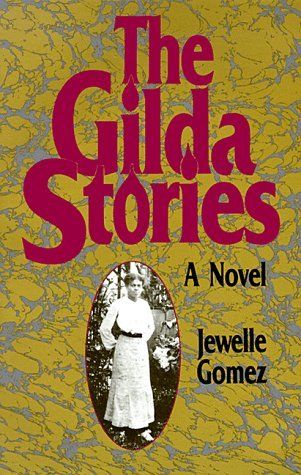
The Gilda Stories by Jewelle Gomez


The winner of two Lambda Literary Awards (fiction and science fiction) The Gilda Stories is a very American odyssey. Escaping from slavery in the 1850s Gilda's longing for kinship and community grows over two hundred years. Her induction into a family of benevolent vampires takes her on an adventurous and dangerous journey full of loud laughter and subtle terror.

8. Find a book set in South Asia (Afghanistan, India, Pakistan, Sri Lanka, etc.).

  • Again, I had quite a bit of difficulty here because I was determined to find an #ownvoices author and stay far away from non-#ownvoices books which use South Asian religions and culture as an exotic backdrop, and don't really connect with the setting. This was infuriatingly difficult, though I did find a LOT of amazing short stories. 


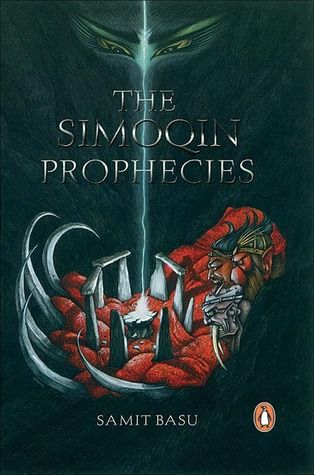
The Simoqin Prophecies by Samit Basu 


The Simoqin Prophecies marks the debut of an assured new voice. Written with consummate ease and brimming with wit and allusion, it is at once classic SFF and subtle spoof, featuring scantily clad centauresses, flying carpets, pink trolls, belly dancers and homicidal rabbits. Monty Python meets the Ramayana, Alice in Wonderland meets The Lord of the Rings and Robin Hood meets The Arabian Nights in this novel-a breathtaking ride through a world peopled by different races and cultures from mythology and history. 

9. Find a book with a biracial protagonist. 

  • A book I've been meaning to get to for a long time since I saw it explode on twitter! The female main character is half-Indian. Can't wait to read this!


Sorcerer to the Crown by Zen Cho


At his wit’s end, Zacharias Wythe, freed slave, eminently proficient magician, and Sorcerer Royal of the Unnatural Philosophers—one of the most respected organizations throughout all of Britain—ventures to the border of Fairyland to discover why England’s magical stocks are drying up.

But when his adventure brings him in contact with a most unusual comrade, a woman with immense power and an unfathomable gift, he sets on a path which will alter the nature of sorcery in all of Britain—and the world at large…

10. Find a book starring a transgender character or about transgender issues. 

  • Again, significant difficulties! But here I've managed to find two fantasy books which feature trans* characters. The first one features an extremely diverse cast and sounds absolutely amazing. The second is a book I've seen around, but I didn't know it touched on trans* issues until I read some reviews. An interesting take on a Chosen One tale!


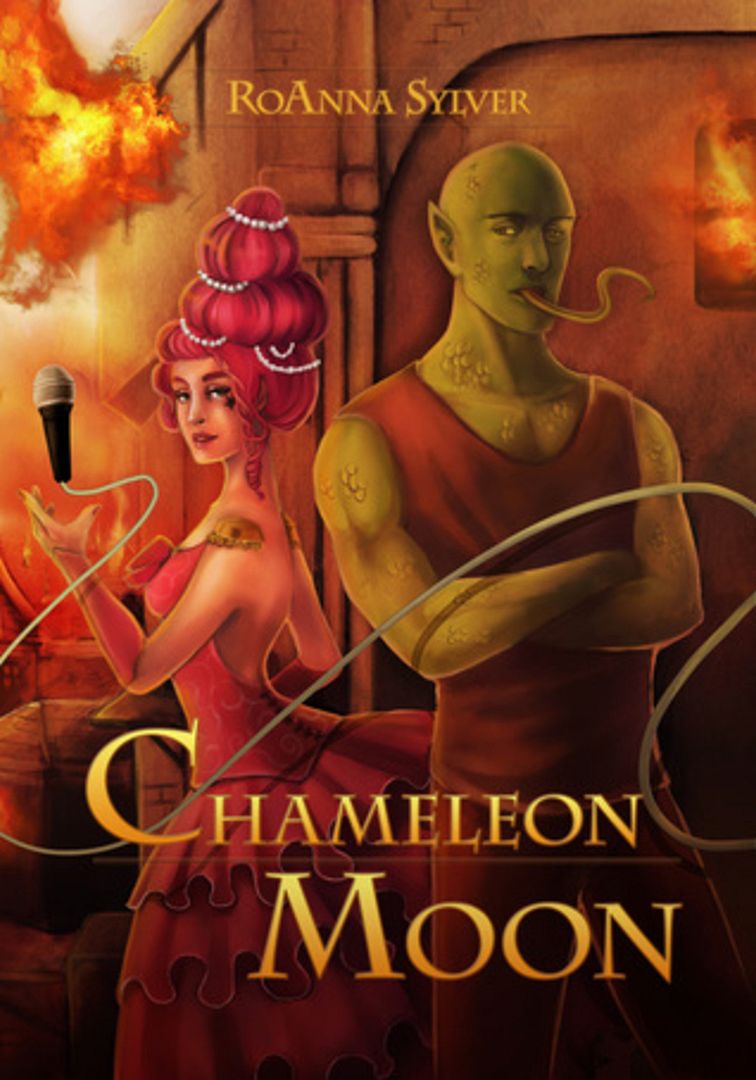
Chameleon Moon by RoAnna Sylver 


The city of Parole is burning. Like Venice slips into the sea, Parole crumbles into fire. And trapped inside is an entire population of people with bizarre, beautiful and terrifying abilities - people who really should not have them. When Regan, an anxiety-ridden hitman with the peeling skin of a lizard meets Evelyn, singer, revolutionary, and unofficial superhero, it’s up to them to get to the heart of the mystery of Parole and its quarantined inhabitants. Along with a diverse group of superpowered friends, they will evade a deadly totalitarian police force, discover the truth about their entwining pasts, and together find the strength to survive a cataclysmic disaster.

Chameleon Moon is the first in three books planned for the series. Book 1 sets up the explosive, sweeping story of Parole and the strange, wonderful people who call it home.


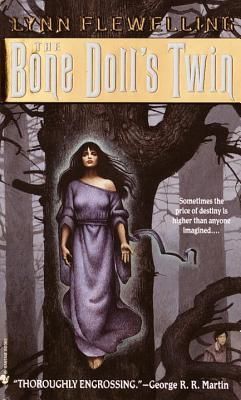
The Bone Doll's Twin by Lynn Flewelling


For three centuries a divine prophecy and a line of warrior queens protected Skala. But the people grew complacent and Erius, a usurper king, claimed his young half sister’s throne.

Now plague and drought stalk the land, war with Skala’s ancient rival Plenimar drains the country’s lifeblood, and to be born female into the royal line has become a death sentence as the king fights to ensure the succession of his only heir, a son. For King Erius the greatest threat comes from his own line — and from Illior’s faithful, who spread the Oracle’s words to a doubting populace.

As noblewomen young and old perish mysteriously, the king’s nephew — his sister’s only child — grows toward manhood. But unbeknownst to the king or the boy, strange, haunted Tobin is the princess’s daughter, given male form by a dark magic to protect her until she can claim her rightful destiny.

Only Tobin’s noble father, two wizards of Illior, and an outlawed forest witch know the truth. Only they can protect young Tobin from a king’s wrath, a mother’s madness, and the terrifying rage of her brother’s demon spirit, determined to avenge his brutal murder....
 
Whew! What a great exercise! I tried to make as many of these #ownvoices as possible but if you've got a great suggestion please let me know. 

If you enjoyed this list, check out #DiverseBookBloggers on twitter, where all the fun started!

With the powers invested in me, I hereby tag:

Ryan @ unbookly
Dos Twinjas @ Twinja Book Reviews
 
Now if you'll excuse me, I'll just be over here adding hella books to my Goodreads.

Saturday, May 21, 2016

Why aren't there more girls in CS?


Someone on twitter suggested that perhaps the reason girls aren't as pervasive in CS is because they're not cut out for the math: Most girls just can't code.

As a programmer who happens to be a woman, I have a few thoughts on this topic. 

Tuesday, May 10, 2016

Currently Reading

*coughs apologetically*

Well, given the rather impressive lapse of time between "I'm Not Dead Yet" and this post, I wouldn't be surprised if anyone thought I HAD died.

WELL I HAVEN'T.

I've been extremely busy with full time work, Camp NaNo (don't ask me about my wordcount PLEASE), an academic publication (!!!), and, oh, getting into graduate school.


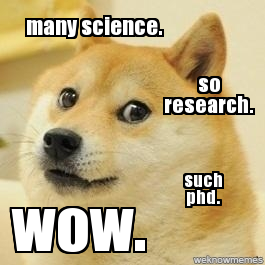
Which I HAVE, so WOOHOO! I've signed off the next 4-7 years of my life to attempting to elucidate a tiny corner of Biology for: a truly minuscule amount of pay, frighteningly low-end living conditions, and an unspecified but undoubtedly insane workload! Fuck yeah SCIENCE!

Giggling? ME? Why no, I am the SOUL of decorum. *snorts*

(I really am super pleased though.)

Now let's talk about books.

Of all things, going on an insane number of graduate school interviews actually was the spark that got me reading at a high velocity again. Blame the planes (I truly hate them). Here's some stuff I've recently read and enjoyed.


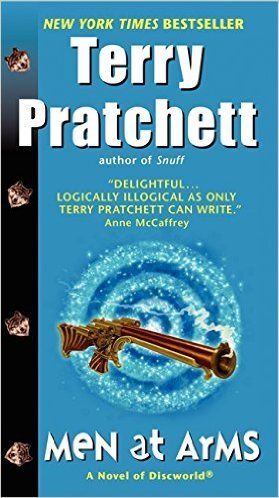
Men At Arms by Terry Pratchett


I've always enjoyed Pratchett and he's one of the few fantasy humorists whose books I happily re-read. And yes, my favorite books of his are in Ankh-Morpork. I love the Guilds (Assassins of course, this is Si who is talking). I love the Night Watch and all the strange characters Pratchett throws in. I like the deftness with which he paints in social problems in a setting which the reader has already engaged in. His original world that still pokes fun at the traditional fantasy we all know and love. A+ would read again.


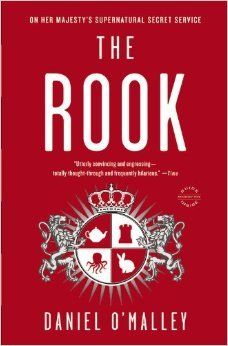
The Rook by Daniel O'Malley


Y'all, this has SPIES. And AMNESIA. And STRONG FEMALE CHARACTERS. Yes it's another "supernatural shit goes down in London"-type but it's so delightfully weird that I didn't feel it hit that trope too hard. Nothing wrong with the trope but generally you have to be better than Parasol Protectorate to get me to read it, else I'll just go read Parasol Protectorate.

This book, like I exuberantly yelled on twitter, makes Bureaucracy look badass. It has some very original ideas for "people with weird magical talents" that don't feel overdone (Gestalt for example. Very unnerving). It does flashbacks and explanatory letters without being boring. I like the sense of roughly equal men and women in positions of power, and the way the main character is forced to navigate her amnesia while not letting anyone else know about it. I like that she doesn't always succeed. I like that she has faults and strengths and human emotions.

Something about the portrayal felt just slightly off--I will have to think about it further. I did get a slight sense of "male writer trying to write female character"--or perhaps trying too hard. It's not bad, but I was faintly reminded of what a good friend once told her brother who asked her how to write female characters:

"Think of an awesome character. Then make the character a girl."

It feels a bit like the author was attempting to include a lot of woman-specific experiences but laid it on a little heavy. Perhaps that's only me, though. It didn't feel disrespectful or off-putting.

Mostly I enjoyed the whole "bureaucracy made badass" aspect. Quiet people FTW.

Highly recommended. Also I just saw Nafiza of The Book Wars is reading Book 2 which I must run out and get IMMEDIATELY.


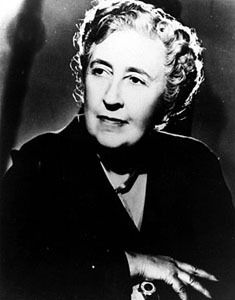
Various Agatha Christie Novels


Murder on the Orient Express. Death on the Nile. Cards on the Table. And more.

If you like murder mysteries and whodunits and haven't read Christie IDK what's wrong with you. Besides writing the most brilliant twisted puzzle plots ever, Christie has a distinct voice and ability to turn her dead bodies and Suspects into People. Despite the fact that the reader goes in expecting to focus on Clues and Motives, Christie manages to give every character a distinctly human and individual personality. And she does it masterfully, in barely a few lines. When I think of that idea of "painting a subject in a few broad strokes" I think of Christie. I think she's extremely valuable to study if you're trying to write a character-centered novel (as I often have trouble with).


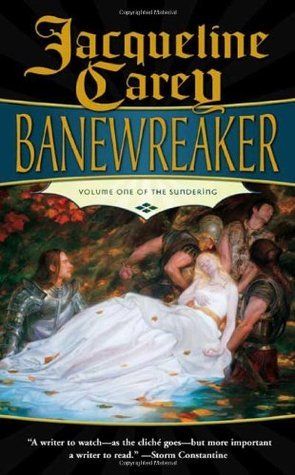
Banewreaker and Godslayer by Jacqueline Carey


MY HEART IS STILL BROKEN FROM THESE BOOKS OKAY. *throws self on couch and weeps forever*

Imagine Lord of the Rings told from Mordor's point of view. That exactly describes these books. Take cliche fantasy and turn it on its head. Ask: is it really moral for the Chosen One & Co to run over to the Evil Lands, start slaughtering the Evil OrcThings, and attempt to murder the Dark Lord? Are their motives REALLY pure? How would YOU feel if a Prophecy was put about spelling your destruction?

Written with the poignant pen of Carey, whose Kushiel novels remain among my absolute favorite EVER, this duology inspires so many feels I can't write coherently because the ending was just TOO PAINFUL. Even though you KNOW what's coming the entire series because obviously. This is a twist on cliche epic fantasy and must follow the formula. But ah! When you turn the POV to the other side it becomes a tragic tale of slow, crushing, pointless destruction, rather than a hopeful story of innocence triumphing over evil. "History is written by the victors" indeed.

Also it makes the Elves seem SUPER irritating and hypocritical. Which they are. Especially when their moral platitudes call for your doom.

In Other News ...


I've also been getting back into writing lately, by performing a major cull on my Many Ideas and re-discovering the joys of snarky literary agent blogs. So if you happen to know of any blogs in the vein of the most excellent Miss Snark of the bygone era, please comment with a link.

What have YOU been reading lately?


(My Goodreads needs a serious update.)