Saturday, August 13, 2016

#ReadThemAllThon TBR List!


It's probably a really bad idea for me to join the #ReadThemAllThon, given imminent moving & the fact that I'm behind on reviews (when am I not?). But I am gonna throw caution to the wind and join in anyway! Live on the edge!

#ReadThemAllThon is run by Aentee @ Read At Midnight

I CHOOSE YOU, BULBASAUR!


CP: 10


 The Fifth Season by N. K. Jemisin

THIS IS THE WAY THE WORLD ENDS... FOR THE LAST TIME.

A season of endings has begun.

It starts with the great red rift across the heart of the world's sole continent, spewing ash that blots out the sun.

It starts with death, with a murdered son and a missing daughter.

It starts with betrayal, and long dormant wounds rising up to fester.

This is the Stillness, a land long familiar with catastrophe, where the power of the earth is wielded as a weapon. And where there is no mercy.
 468 pgs, +46 CP potential

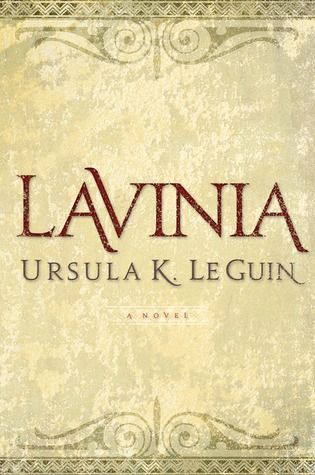
Lavinia by Ursula Le Guin

In The Aeneid, Vergil’s hero fights to claim the king’s daughter, Lavinia, with whom he is destined to found an empire. Lavinia herself never speaks a word. Now, Ursula K. Le Guin gives Lavinia a voice in a novel that takes us to the half-wild world of ancient Italy, when Rome was a muddy village near seven hills.

Lavinia grows up knowing nothing but peace and freedom, until suitors come. Her mother wants her to marry handsome, ambitious Turnus. But omens and prophecies spoken by the sacred springs say she must marry a foreigner—that she will be the cause of a bitter war—and that her husband will not live long. When a fleet of Trojan ships sails up the Tiber, Lavinia decides to take her destiny into her own hands. And so she tells us what Vergil did not: the story of her life, and of the love of her life.
279 pgs, +27 CP potential


A Tyranny of Petticoats edited by Jessica Spotswood

From an impressive sisterhood of YA writers comes an edge-of-your-seat anthology of historical fiction and fantasy featuring a diverse array of daring heroines.

Criss-cross America — on dogsleds and ships, stagecoaches and trains — from pirate ships off the coast of the Carolinas to the peace, love, and protests of 1960s Chicago. Join fifteen of today’s most talented writers of young adult literature on a thrill ride through history with American girls charting their own course. They are monsters and mediums, bodyguards and barkeeps, screenwriters and schoolteachers, heiresses and hobos. They're making their own way in often-hostile lands, using every weapon in their arsenals, facing down murderers and marriage proposals. And they all have a story to tell.
354 pgs, +35 CP potential

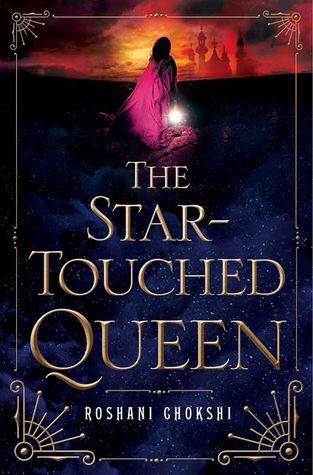
The Star-Touched Queen by Roshani Chokshi

Maya is cursed. With a horoscope that promises a marriage of death and destruction, she has earned only the scorn and fear of her father’s kingdom. Content to follow more scholarly pursuits, her whole world is torn apart when her father, the Raja, arranges a wedding of political convenience to quell outside rebellions. Soon Maya becomes the queen of Akaran and wife of Amar. Neither roles are what she expected: As Akaran’s queen, she finds her voice and power. As Amar’s wife, she finds something else entirely: Compassion. Protection. Desire…

But Akaran has its own secrets—thousands of locked doors, gardens of glass, and a tree that bears memories instead of fruit. Soon, Maya suspects her life is in danger. Yet who, besides her husband, can she trust? With the fate of the human and Otherworldly realms hanging in the balance, Maya must unravel an ancient mystery that spans reincarnated lives to save those she loves the most…including herself.
342 pgs, +34 CP potential

Don't Cry, Tai Lake by Qiu Xiaolong


Chief Inspector Chen Cao of the Shanghai Police Department is offered a bit of luxury by friends and supporters within the Party – a week’s vacation at a luxurious resort near Lake Tai, a week where he can relax, and recover, undisturbed by outside demands or disruptions. Unfortunately, the once beautiful Lake Tai, renowned for its clear waters, is now covered by fetid algae, its waters polluted by toxic runoff from local manufacturing plants. Then the director of one of the manufacturing plants responsible for the pollution is murdered and the leader of the local ecological group is the primary suspect of the local police. Now Inspector Chen must tread carefully if he is to uncover the truth behind the brutal murder and find a measure of justice for both the victim and the accused.
262 pgs, +26 CP potential

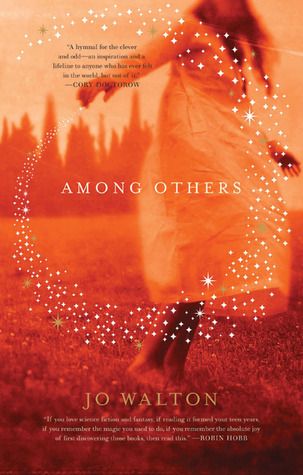
Among Others by Jo Walton

Raised by a half-mad mother who dabbled in magic, Morwenna Phelps found refuge in two worlds. As a child growing up in Wales, she played among the spirits who made their homes in industrial ruins. But her mind found freedom and promise in the science fiction novels that were her closest companions. Then her mother tried to bend the spirits to dark ends, and Mori was forced to confront her in a magical battle that left her crippled--and her twin sister dead.

Fleeing to her father whom she barely knew, Mori was sent to boarding school in England–a place all but devoid of true magic. There, outcast and alone, she tempted fate by doing magic herself, in an attempt to find a circle of like-minded friends. But her magic also drew the attention of her mother, bringing about a reckoning that could no longer be put off…
304 pgs, +30 CP potential

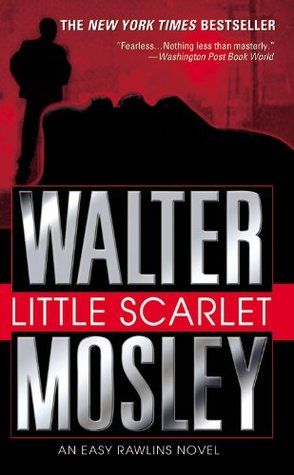
Little Scarlet by Walter Mosley

Watts is smoldering in ruins-and the cops are on Easy Rawlins's doorstep. Easy expects the worst, as usual. But, incredibly, they're asking for his help. A redheaded woman known as Little Scarlet had sheltered a man during the riots. Witnesses later saw him fleeing her building; not long after, Little Scarlet was found viciously murdered. Now, with his old friend Mouse at his side, Easy follows the case's single clue across Los Angeles. The missing man is the key, but he's only the beginning. Hidden in the heart of the city is a killer whose red-hot rage is as fierce as the fires that rocked L.A.
325 pgs, +32 CP potential

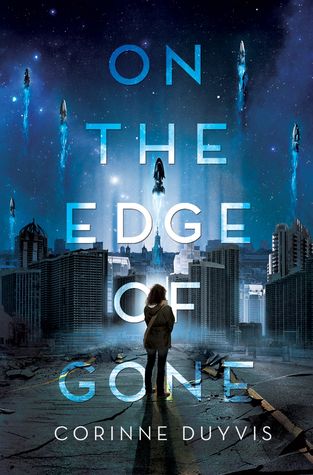
On the Edge of Gone by Corinne Duyvis

January 29, 2035.

That’s the day the comet is scheduled to hit—the big one. Denise and her mother and sister, Iris, have been assigned to a temporary shelter near their hometown of Amsterdam to wait out the blast, but Iris is nowhere to be found, and at the rate Denise’s drug-addicted mother is going, they’ll never reach the shelter in time.

Then a last-minute encounter leads them to something better than a temporary shelter: a generation ship that’s scheduled to leave Earth behind and colonize new worlds after the comet hits. But each passenger must have a practical skill to contribute. Denise is autistic and fears that she’ll never be allowed to stay. Can she obtain a spot before the ship takes flight? What about her mother and sister?

When the future of the human race is at stake, whose lives matter most?
 456 pgs, +45 CP potential 


I tried to make this list as diverse as possible! It includes a lot of new-to-me stuff ... namely: YA, which I don't read that much! I also read romance extremely rarely, so we'll see how this goes. I'm excited that I got to list 2 diverse detective novels, 1 scifi with #ownvoices disability rep, 1 fantasy with disability rep, 2 PoC-inclusive fantasy books, and 2 feminist theme books! I can't wait to read these. Now I just need time!

Link me your #ReadThemAllThon TBR in the comments! Or just tell me your favorite Pokemon :D

Friday, August 12, 2016

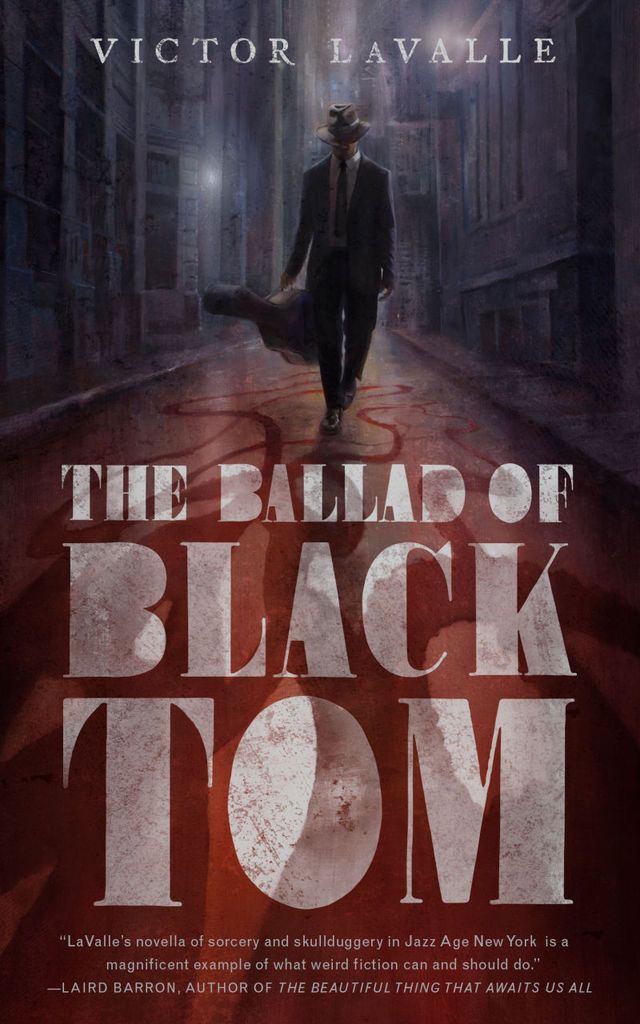
REVIEW: The Ballad of Black Tom by Victor LaValle

Star Rating: **** 4/5


Title: The Ballad of Black Tom
Author: Victor LaValle
Genre: Fantasy
Subgenre: Weird (or New Weird)
Review by Silicon
People move to New York looking for magic and nothing will convince them it isn't there.

Charles Thomas Tester hustles to put food on the table, keep the roof over his father's head, from Harlem to Flushing Meadows to Red Hook. He knows what magic a suit can cast, the invisibility a guitar case can provide, and the curse written on his skin that attracts the eye of wealthy white folks and their cops. But when he delivers an occult tome to a reclusive sorceress in the heart of Queens, Tom opens a door to a deeper realm of magic, and earns the attention of things best left sleeping.

A storm that might swallow the world is building in Brooklyn. Will Black Tom live to see it break?

Intro


I'm going to start this review a little differently: with a link to an interview of the author.

Despite being such a short book, LaValle's story is a highly complex one. The Ballad of Black Tom is a retelling, a subversion of HP Lovecraft's infamous The Horror at Red Hook, a disgustingly racist rant thinly disguised as a story.  I'm not going to review that piece of shit in this post (ohhhh, but I have PLANS, plans with graphs, for the future), and if you're curious about just how bad it is I'm linking  a Storify of my livetweeting while reading the thing: here.

Essentially, Red Hook centers on the main character's dislike, fear, and misunderstanding of the immigrant (and non-immigrant PoC) community in Brooklyn. Black Tom is LaValle's answer to Lovecraft's bigotry. From the interview:
Where Lovecraft would’ve seen an enigma I could say these were people I knew. They were complicated but not mysterious. What if I reimagined Lovecraft’s old story from their point of view? What if I made one of them the engine of the tale? How much would change if the folks used to playing the background came center stage instead?
This is something LaValle absolutely succeeds in.

Plot


The Ballad of Black Tom follows the character of Charles Thomas Tester, aka Tommy aka "Black Tom", a black man living in Harlem who supports his ailing father by taking odd, magical jobs around New York City. On one fateful day, he meets a white man named Robert Suydam, who wants to hire Tommy to perform in and be a part of a mysterious event at his house--a project Tommy finds is unearthly, frightening, and dangerously powerful. And that's all I'm gonna summarize because it is really hard to write about this book without spoilers.

If you've read Red Hook, you know it starts out centered entirely on the character of Malone, and his PTSD from the terrifying events he witnessed during his investigation into Suydam's doings. LaValle very significantly does not even mention Malone until we've been immersed in Tommy's world, the world that Malone--and Lovecraft--find so utterly incomprehensible. And when Malone shows up, he's a side character--without agency--looking on as Tommy handles a detective's contrived aggression.
This is an excellent example of how LaValle subverts Lovecraft's original tale. Black Tom really feels like as if you took Red Hook, turned it inside-out, and kept only the bare bones of the story's plot while completely re-imagining the flesh, the heart of the story.

Comparison


To be honest, LaValle GIVES the Red Hook story a heart, one we can connect to and understand, in the character of Tommy Tester. In Red Hook, Malone is constantly afraid of the faceless mass of Red Hook residents, who he does not even see as human. In Black Tom, these people are the heart and soul of the story--a grounding force, a community, that Tommy feels safe and comfortable and accepted in.

Something I really liked about Black Tom is the way its theme really is understanding, empathizing, while Red Hook is all about fearing the Other. Example: when Tommy and his father visit the Victoria Society, a Caribbean social club. Tommy initially had described the club as a den of illegal activity, a place where the most hardened criminals go. Now, actually there, Tommy feels remorse as he realizes he had been harboring assumptions about immigrants from the Caribbean which were untrue. He realizes that they exist in a whole world similar to his own, with similar hopes and aspirations, and not as mere caricatures that gossip had painted them. This was a really lovely scene, one of my favorites in the book. 

Where Malone has only amorphous, hysterical fears unattached to reality, Tommy's fears are painfully real. The descriptions of Tommy's interactions with police, with white men, ring SO DAMN TRUE especially considering today's insane racial injustice problem. Malone imagines terrors based on his own inability to empathize with People of Color. Tommy faces real consequences--harassment, illegal confiscations of property, violence--when he does not act completely submissive in the presence of white men.  You may think I'm making an inflated comparison, but hilariously even in Lovecraft's own Red Hook, nothing happens to Malone despite all the time he spends feeling uneasy around Red Hook residents. He just has a few bad dreams. Tommy faces real danger.

I am not going to spoil SHIT. But let's say the Inciting Incident is so raw, so extremely parallel to today's tragedies, that it took my breath away.

The second half of the novella has a significant change--we switch to Malone's PoV, and Tommy becomes Black Tom, seen only from the outside now. This half more closely parallels Lovecraft's original, with Malone's biases and prejudice directing his actions. However, we have a crucial insight now--we already know and understand the world that Malone is still so confused by, we can understand why events unfold that in Red Hook are so baffling in their lack of motivation.

In Lovecraft's Red Hook, evil is a sleeping, otherworldly being. Evil is the unknown, given a form by his crude sketches of the Red Hook community he cannot understand. Evil is bringing down an inhuman power which does not care about human life, which consumes indifferently to our suffering. But in Black Tom, evil is not an eldritch power--as Tommy says:
What was indifference compared to malice? 
Human malice is shown to be so much greater than otherworldly indifference. A significant message, especially given Lovecraft's own clearly evident prejudice, which saturates his Red Hook piece and obscures even the story itself.

Writing Style


LaValle's writing style is very unfrilled, plain and succinct. He says what he means to say and doesn't spend words embellishing the events that unfold, leaving them raw and piercing. Tommy's reactions and thoughts are described from a slightly reserved close third POV which works very well for this story and parallels the Red Hook POV style. Though, ultimately, the Red Hook story and LaValle's Black Tom have very different writing styles--LaValle does not spend nearly as much time in lingering description as Lovecraft, for example.

One element I think LaValle especially excels at is "show, not tell" reactions. Though he does not explicitly state what Tommy feels often, we can certainly imagine and empathize with what he feels throughout the book. The terrible events that unfold have a special horror because we can SEE the character's reactions, and imagine their internal state. With single, perfectly placed sentences, LaValle does an excellent job at that difficult task of implicitly directing a reader's thoughts without outright stating what he wants them to think about.

Conclusion


There is no way I have done, or could do this story justice in this review. This is one of those deep, layered stories that needs significant analysis to fully extract all meaning. I really think Ballad of Black Tom should be treated as one of those classics we read in English classes. It's certainly as complex.

Black Tom masterfully subverts an extremely difficult, tremendously problematic story by one of the biggest names in Horror. But it's much more than just a retelling. It's a reimagining, a reclaiming, a fundamental redoing that takes the worst parts of Lovecraft's racism and shows how his incomprehensible caricatures are actually people. Are a COMMUNITY. It shows us how unimaginable evil isn't actually an otherworldly force, but the capacity for hatred that lies within humanity itself.
"Indifference would be such a relief," Tommy said.
There's so much more in here that I would love to touch upon, but I am going to instead recommend other sources. Firstly, LaValle's own interviews give deep insight into his aims and aspirations while writing this remarkable story. Secondly, check out the reviews already posted, and those to come, in #DSFFBookClub, where we're discussing this book right now! Finally, @Cecily_Kane kindly linked me a BRILLIANT analysis of Black Tom and Red Hook by Vajra Chandrasekera at Strange Horizons: here. I highly recommend you read it, it certainly goes a lot deeper than my review and touches upon a lot of extremely important points.

This is a bit of an unconventional review for me, but it's an unconventional book! I certainly recommend this story to everyone, especially if you've read Lovecraft. If you love the New Weird fantasy/horror subgenre, this is a must.

Reading Black Tom, and Red Hook have inspired me to seek out more Lovecraft subversion tales. After reading Red Hook, I'm way more interested in reading these than Lovecraft himself. If you're curious about that racist as fuck story (yes, I am still REALLY pissed at Red Hook), you can read it for free here, though I recommend a LARGE glass of wine as accompaniment.

Join in the discussion at #DSFFBookClub, and let me know your thoughts on Lovecraft and The Ballad of Black Tom below in the comments!


Wednesday, August 10, 2016

The Pokemon Go Book Tag!


This tag is just too amusing of an idea to pass by. Just pretend I'm not weeping in the corner over here because my phone is incapable of running Pokemon Go.

This took me embarrassingly wrong to complete because I'm easily distracted. Well, it's done now. BEHOLD.

Tag created by Aentee @ Read At Midnight.

The Sword of Shannara by Terry Brooks. Yes really. I know it's a horrible LotR ripoff BUT I WAS IN MIDDLE SCHOOL OKAY.

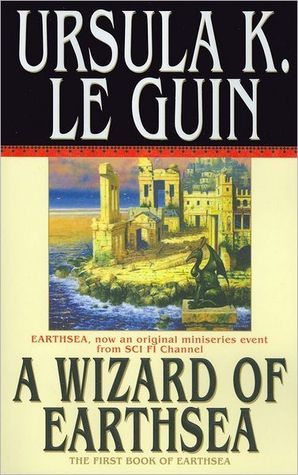
A Wizard of Earthsea. Ursula Le Guin is my favorite classic SFF author and the Earthsea series is just so incredible in so many ways. My personal favorite is The Tombs of Atuan, because I was a weird morbid kid and the idea of the silent, dark labyrinth that had to be navigated solely by touch ... so, so good.


China Mieville's Kraken. I remember when New Weird was a big thing in the fantasy genre and LITERALLY EVERYONE was reading The City & The City, Perdido Street Station, and Kraken. I finally did start Kraken, and it is extremely weird, but so far it hasn't really drawn me in.


This is too easy in the fantasy genre, where every second book is a LotR remake. I choose Dragonlance by Weis & Hickman, which is so trope-y it probably wraps all the way around to original somehow. We all have guilty pleasures, ok? Mine happens to be campy, terrible D&D-based fantasy. I also read Drizzt. Shut up.


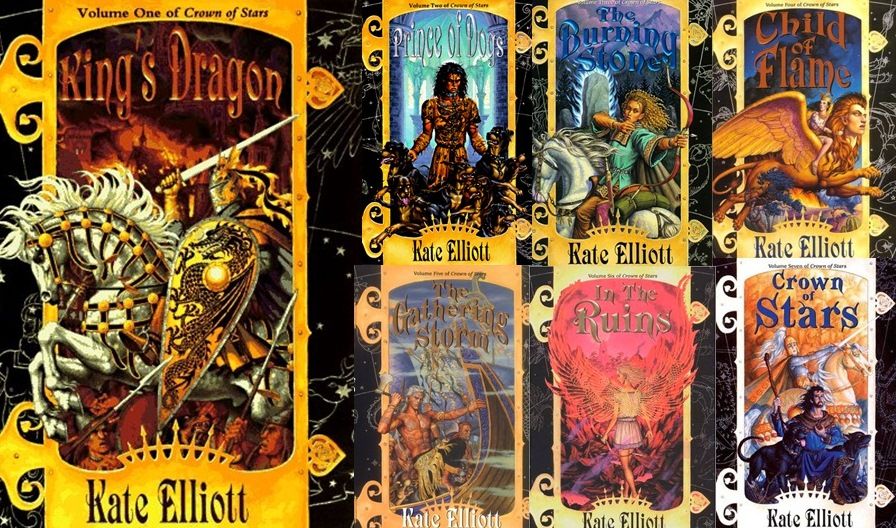
Kate Elliot's Crown of Stars. I've been eyeing this series for probably like 8 years or something. But after Wheel of Time, A Song of Ice and Fire, and Malazan, I don't know if I'm ready to get involved in another fantasy epic of the same size right now.


Art © 2015 by Plunderpuss
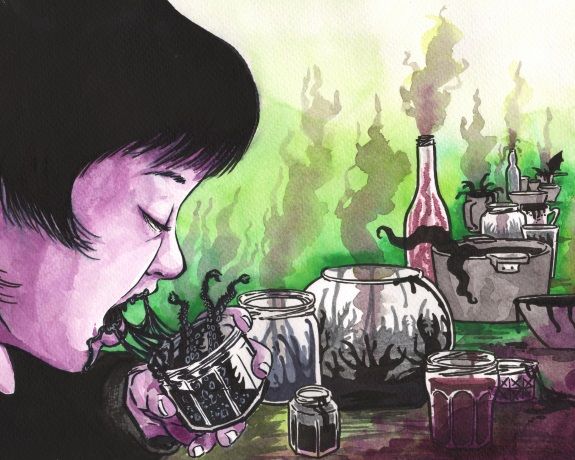
Given the fact that I intentionally avoid suspense & horror, this is hard. I'll link not a book, but a short story: Hungry Daughters of Starving Mothers by Alyssa Wong. Brilliant, amazing *shivers*


ACTUALLY I HAVE A BOOK TOO. Bonus round: NK Jemisin's The Killing Moon. Such a creepy magic system. And NK Jemisin EXCELS at grabbing your feels and not letting them go until she's extracted every drop of remaining emotional stability. READ IT.


Phèdre & Joscelin from the Kushiel series by Jacqueline Carey. Normally I don't enjoy romance in books--*ducks thrown tomatoes*--but Phèdre and Joscelin have such a deliciously complicated relationship, with tragedy and consequences and crossroads and ... I LIKE POIGNANT BOOKS, OKAY? Happy isn't intense enough for me. Usually.

Kushiel's Dart is a wonderfully lush book, probably one of the first SFF books I picked up with significant LGBT+ inclusion. It has brilliant politics, complex human relationships, beautiful writing, and READ IT OKAY. READ. IT.


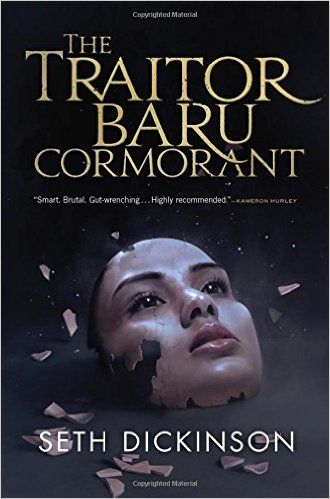
The Traitor Baru Cormorant by Seth Dickinson. Holy shit. This book grabbed and didn't let go and was AMAZING. If you like brutal political intrigue, read this book. READ IT.


I tried and tried to think of one, but it turns out my gut reaction was right. I don't like spin-offs. NO SPIN-OFFS. Like, maybe Drizzt shit? But not sure if D&D-based fiction really counts ... since essentially every series is a spin-off. Pass?

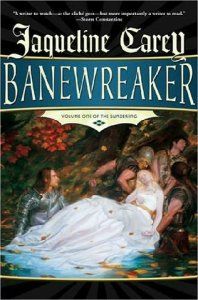
The Sundering series by Carey. I was expecting it to be a clever commentary on standard fantasy tropes, but not particularly emotion-destroying. BOY WAS I WRONG. This series is like LotR except from the PoV of Sauron's side. And Carey really, REALLY makes you sympathize with them. So much that I was legit sad when the Good Side had victories. EVIL IS JUST MISUNDERSTOOD /weeps


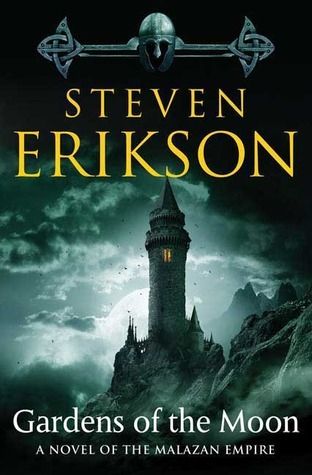
Malazan by Erikson. Everyone who reads epic fantasy knows this name, knows of its legendary worldbuilding & notoriously difficult reading experience. I still love it. Even if I have to take a break between each Malazan book I read. One day I will finish it!

OK so Barnes and Noble has this amazing collector's edition leather-bound fiction and I basically want ALL OF IT. What I would really want, though? Octavia Butler (one of her best books: Kindred) in that kind of beautiful binding. One of the greats of SFF writing, she deserves equal treatment as Tolkien.

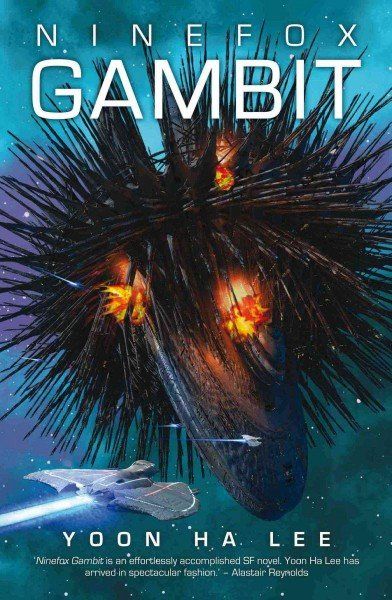
Ninefox Gambit by Yoon Ha Lee. I'm actually not sure if this is a debut? I think it is. In any case, I NEED TO READ THIS. Mathematical space opera! I ADORE hard science fiction, so this sounds like exactly the sort of book I will love. Reading Glaiza's review made me so much more eager to get my hands on this book. Cannot wait.

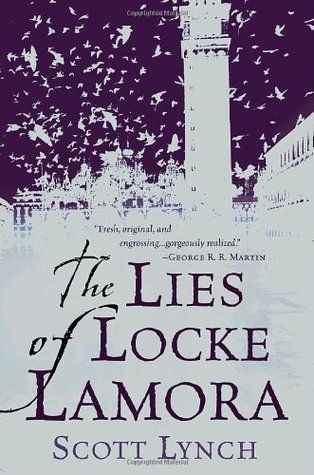
Scott Lynch. The Gentleman Bastards series (Book 1: The Lies of Locke Lamora) is one of the only ones that I will go out and buy the hardcover within a week of the release. Like thieves, snark, and brilliant heists? You need these books.


I won't say GRRM, I won't say GRRM ...

*struggles*

... Winds of Winter. Sorry.


Do you have OPINIONS on any of these books? Sabers at dawn! (or write a comment below)


Sunday, August 7, 2016

REVIEW: The Dinosaur Lords by Victor Milan (DNF)

Star Rating: ** 2/5


Author: Victor Milan
Genre: Fantasy
Subgenre: High Fantasy (of the GoT type, not LotR. No Chosen Ones here.)
Review by Silicon.

DNF: 350 pages read. This review is not gentle.
A world made by the Eight Creators on which to play out their games of passion and power, Paradise is a sprawling, diverse, often brutal place. Men and women live on Paradise as do dogs, cats, ferrets, goats, and horses. But dinosaurs predominate: wildlife, monsters, beasts of burden – and of war. Colossal planteaters like Brachiosaurus; terrifying meateaters like Allosaurus and the most feared of all, Tyrannosaurus rex. Giant lizards swim warm seas. Birds (some with teeth) share the sky with flying reptiles that range in size from batsized insectivores to majestic and deadly Dragons.

Thus we are plunged into Victor Milán's splendidly weird world of The Dinosaur Lords, a place that for all purposes mirrors 14th century Europe with its dynastic rivalries, religious wars, and byzantine politics…and the weapons of choice are dinosaurs. Where we have vast armies of dinosaur-mounted knights engaged in battle. And during the course of one of these epic battles, the enigmatic mercenary Dinosaur Lord Karyl Bogomirsky is defeated through betrayal and left for dead. He wakes, naked, wounded, partially amnesiac – and hunted. And embarks upon a journey that will shake his world.

Intro


Guys, I tried.

I really wanted to like this book. I would have forgiven so much--overlooked so much--just because the premise amused me so. Knights. On. Dinosaurs. Dinosaur battles. The cover quote describes it as "a cross between Jurassic Park and Game of Thrones." How could it go wrong?

Well I'm going to tell you.

Setting


Imagine a typical European-based high fantasy setting. Medieval weaponry, feudal power structure, warring Kings, knights. Now add DINOSAURS. Awesome idea!

The one thing I'm really happy about with this book is that Milan goes all into its main selling point: the dinosaurs. Page 10 starts the first dinosaur battle of the book and IT DELIVERS. Milan does a pretty good job integrating dinosaurs into an otherwise-traditional Eurocentric High Fantasy setting. 

The entire first battle is excellent. There's several different types of dinosaurs (triceratops, hadrosaurs, allosaurus, T. Rex, just to name a few) in the battle, and each is deployed as per its unique strengths. The battle is well written and feels immediate, and there's some great war strategy involved that I really enjoyed. All two stars I gave this book are for the excellent inclusion of dinosaurs in a high fantasy setting. The dinosaurs feel integral, fundamentally a part of the land and culture.

Unfortunately, between the end of the first dinosaur battle and page 350 there are exactly 0 other dinosaur battles. The dinosaurs do show up throughout the book, but the focus is definitely not on them as the book proceeds past the first (and so far, only) major battle.

Characters


Ah characters, the most crucial element to any reader's appreciation of a book.

There are three major PoV characters: Melodia, Jaume, and Rob. Basically by page 350 I was rooting for assassins to murder all of them.

Melodia is a classic Mary Sue. She's a Princess of Spaña, beautiful and desired by everyone, idolizes her lover Jaume, and basically just spends all her time thinking about getting laid and ignoring gossip. (She's not like the other girls! Who are smart and PAY ATTENTION TO COURT POLITICS.). Melodia reportedly has deeply studied warfare but is basically patted on the head by Jaume on all occasions where she tries to have an opinion. By page 350 I would be hard pressed to name a single skill Melodia displays. She's just an ORNAMENT. Dear authors: THIS. IS. NOT. HOW. YOU. WRITE. WOMEN. Especially if you only have ONE important female character.

Jaume the [string of explicatives] warrior is impossibly handsome, never defeated in battle, endlessly patient, wonderfully righteous, and probably takes care of baby animals in his spare time. You know how in high school movies, if the scriptwriters want you to instantly feel sympathy for a character, they show another character drop all their books and the Character of Goodness stops and helps them pick them up? Just imagine incidents like this occurring every Jaume chapter. The author clearly really wants us to like him.

In one notable scene he has a rapist & murderer hanged and is forced to defend his actions against the Other Corrupt Nobles, thus obviously showing the Reader how morally superior he is. Clearly we should all feel a deep gratefulness to him for this rather basic action on part of a medieval law enforcer. I particularly despise it when authors use this little trick--the rape & murder of other characters are just vehicles for us to see how GOOD Jaume is! He's like Jaime from GoT, if you remove literally every shade of moral greyness that makes him interesting. If it isn't obvious I am really on the side of this dude's eventual murderer.

Compared to the Impossibly Perfect Duo, my dislike of Rob and Karyl is rather tame. Karyl is merely irritating, one of those "I'm not gonna say anything because mysterious > sensible communication" types, who we are supposed to accept is a Brilliant Tactician and Commander just because we're told. Rob started out interesting--he is shown to be intelligent--but eventually just degrades into a whiny dude who's just perpetually fed up with Karyl.

I'm Not Done Ranting About Spaña


You know that thing where a fantasy culture is supposed to be so original and radical and boundary-smashing but then you read it and it's literally just young beautiful women wearing no clothes and constantly thinking about sex?

Yeah.

OK, so you've got a culture that's cool with wearing very little clothing. That's fine! There's many in our real world like that! But if people are USED to seeing more skin, people also don't tend to sexualize that skin. We don't think there's anything particularly amazing about ankles, but the Victorians would probably disagree. Hint hint, book.

What's screwed up is when it's only the young women who wear almost nothing. The older women, the men are considerably more clothed. Also, the hypersexualization of the women really sat ill with me. When you describe women's bodies in lingering detail but don't pay the same attention to the men, you've got a problem.

Political Intrigue


I love political intrigue in fantasy books! Usually.

I really did not care at all about any of the political manoeuvring in this novel at all. Could not give a shit. The author gives no reason for me to care about the politics of any nation. One of the major PoV characters, Melodia, herself frequently states she doesn't care at all for court politics, and she's a princess! Why should I?

The political manoeuvring is not really shown, it is told. Oh god the info-dumps in this novel. So many. The most notable one was immediately after the much-delayed sex scene, which I found completely ludicrous. So much name-dropping, "As you know, Bob"-style explanations, the main characters describing the map of the land to each other, reminding each other who hates whom, of old rebellions ... I honestly can't remember most of it because I skimmed the vast majority.

It didn't feel masterful or well-executed. When I read good political intrigue, I usually get the sense of a powerful intelligence observing and moving chess pieces behind the curtain. There was none of that here. Nothing particularly shocking happened either, as in the style of GoT reactionary style of politics. It was just ... I know the author did a lot of planning and worldbuilding and wanted to show the reader, but I just wasn't given a reason to care.

Plot


The vast majority of the plot revolves around the politics of Spaña, Melodia's love life, and Rob's irritation with Karyl. I think. The book may be called the Dinosaur Lords, but the main focus is on human politics. I was really hoping the dinosaurs would play a bigger part of this novel. As it is, it feels like the author tried to do a GoT-style politics-based plot but it didn't really work. I was hoping for more campy dinosaur battles, but it feels almost like the first dinosaur battle is bait to get you to read the following 300 pages of pretty standard human drama.

Given the fact that I didn't care about the politics, the plot was pretty boring.

Writing Style


I thought the writing style was pretty okay, for the most part. Not amazing, but not terrible. What killed me was the info-dumps. So many. So ill-concealed. I already ranted about this, so I won't repeat myself. It was pretty bad.

Also the dialogue. It was mostly okay, but then you get hit with gems like:
"He doesn't lust after my cinnamon-skinned young body, at least so far as I know."
I'm just going to let that stand alone.

Diversity


I'm not really sure if this book contains PoC or not, which is a bad sign. My confusion is mainly due to that "cinnamon-skinned" quote, which appears around pg 325. The cultures are essentially European. Which didn't surprise me, as the map is essentially Europe with slightly modified names. Still, even Europe didn't exist in an only-white people vacuum. But most Eurocentric fantasy does!

I was really not happy when one major character loses a hand, but conveniently gets it back via a Sorceress who has something to prove. Yet another example of how the fantasy genre is really not awesome with handling disability.   

One good point is the casual inclusion of bisexual, lesbian, and gay characters in the book, specifically in Spaña. Jaume is bisexual and polyamorous. This isn't shown to be a big deal or something that required special explanation. He just simply IS. There also doesn't appear to be any religious or cultural homophobia affecting society in this book.

Final Remarks


I wasn't expecting great literature, but I was expecting more than this. This novel falls in the depressingly large bin of books with amazing premises which suck at writing women. Among other issues. The nail in the coffin was definitely the way Melodia was handled.

It started off so great! But when Karyl takes a fall of a cliff, so does the quality of the book. I won't be finishing this, and unless I see evidence that this author has learned to write much better female characters I won't be picking anything up by him either. 

So disappointed.

Sunday, July 31, 2016

Diverse Detective Fiction

 
When I'm super busy or life is extra stressful, I tend to pick up an Agatha Christie rather than one of my many intense fantasy novels. They're quick, engaging, and don't generally destroy my emotions (a plus when life itself is busy destroying said emotions). Perfect light reading.

Yet when I look at my piles of detective novels, there's something very disappointing about them. They're all set primarily in Europe or America. Every detective is white. 

I want my pile of cozy mysteries to include detectives who aren't almost universally white men. After all, if we can have themed mysteries like Quilting Mysteries and Cat Mysteries and Maple Syrup Mysteries (yes really), then surely we can also have More Representative of The World We Live In Mysteries too?

So on Twitter, I asked if anyone had recommendations for more (specifically: racially) diverse mysteries.


And Twitter delivered. Here's some of the recommendations I got: many thanks to @Bina_ReadThis, @hemapen especially! If you've read any of these, please let me know what you thought!


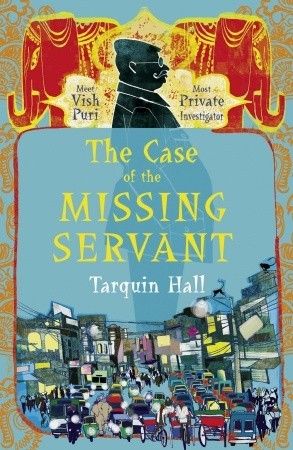
1. The Case of the Missing Servant (Vish Puri #1) by Tarquin Hall

The portly Vish Puri is India’s most accomplished detective, at least in his own estimation, and is also the hero of an irresistible new mystery series set in hot, dusty Delhi. Puri’s detective skills are old-fashioned in a Sherlock Holmesian way and a little out of sync with the tempo of the modern city, but Puri is clever and his methods work.

The Case of the Missing Servant shows Puri (“Chubby” to his friends) and his wonderfully nicknamed employees (among them, Handbrake, Flush, and Handcream) hired for two investigations. The first is into the background of a man surprisingly willing to wed a woman her father considers unmarriageable, and the second is into the disappearance six months earlier of a servant to a prominent Punjabi lawyer, a young woman known only as Mary.

The Most Private Investigator novels offer a delicious combination of ingenious stories, brilliant writing, sharp wit, and a vivid, unsentimental picture of contemporary India. And from the first to the last page run an affectionate humour and intelligent insights into both the subtleties of Indian culture and the mysteries of human behaviour.


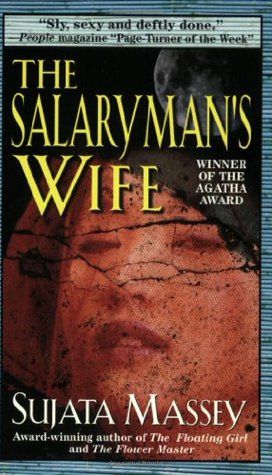
2. The Salaryman's Wife (Rei Shimura#1) by Sujata Massey

Japanese-American Rei Shimura is a 27-year-old English teacher living in one of Tokyo's seediest neighborhoods. She doesn't make much money, but she wouldn't go back home to California even if she had a free ticket (which, thanks to her parents, she does.) Her independence is threatened however, when a getaway to an ancient castle town is marred by murder.

Rei is the first to find the beautiful wife of a high-powered businessman, dead in the snow. Taking charge, as usual, Rei searches for clues by crashing a funeral, posing as a bar-girl, and somehow ending up pursued by police and paparazzi alike. In the meantime, she manages to piece together a strange, ever-changing puzzle—one that is built on lies and held together by years of sex and deception.


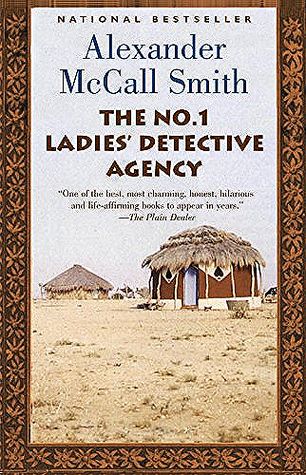
3. The No. 1 Ladies' Detective Agency (No. 1 Ladies' Detective Agency #1) by Alexander McCall Smith

Wayward daughters, missing husbands, philandering partners, curious conmen - If you've got a problem, and no one else can help you, then pay a visit to Precious Ramotswe, Botswana's only - and finest - female private detective, and her assistant, Mma Makutsi. Her methods may not be conventional, and her manner not exactly Miss Marple, but she's got warmth, wit and canny intuition on her side, not to mention Mr J.L.B. Matekoni, the charming proprietor of Tlokweng Road Speedy Motors. And Precious is going to need them all as she sets out on a series of cases that tumbles our heroine into a hotbed of strange situations and more than a little danger...

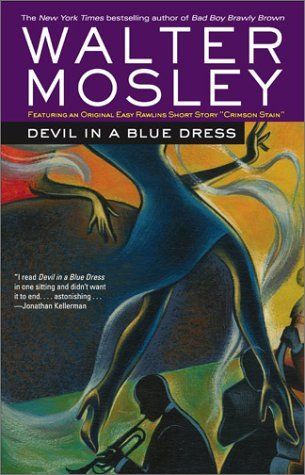
4. Devil in a Blue Dress (Easy Rawlins #1) by Walter Mosley

In Los Angeles of the late 1940s, Easy Rawlins, a black war veteran, has just been fired from his job at a defense plant. Easy is drinking in a friend's bar, wondering how he'll meet his mortgage, when a white man in a linen suit walks in, offering good money if Easy will simply locate Miss Daphne Monet, a blonde beauty known to frequent black jazz clubs.


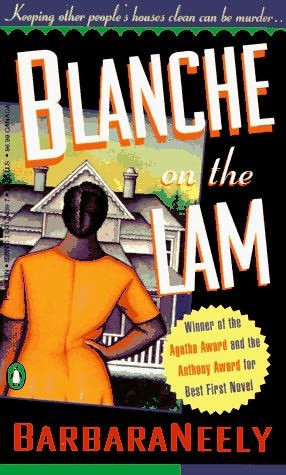
5. Blanche on the Lam (Blanche White #1) by Barbara Neely

Blanche White lends a refreshing African-American, female twist to the mystery tradition, as she turns from domestic worker to insightful--if reluctant--sleuth. A middle-aged housekeeper with a strong sense of humor, Blanche becomes an unlikely yet ingenious sleuth when murder disrupts the wealthy household of her employers.


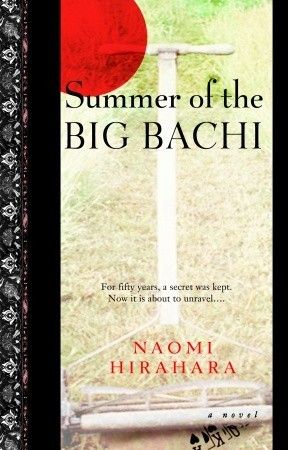
6. Summer of the Big Bachi (Mas Arai #1) by Naomi Hirahara

In the foothills of Pasadena, Mas Arai is just another Japanese-American gardener, his lawnmower blades clean and sharp, his truck carefully tuned. But while Mas keeps lawns neatly trimmed, his own life has gone to seed. His wife is dead. And his livelihood is falling into the hands of the men he once hired by the day. For Mas, a life of sin is catching up to him. And now bachi—the spirit of retribution—is knocking on his door.

It begins when a stranger comes around, asking questions about a nurseryman who once lived in Hiroshima, a man known as Joji Haneda. By the end of the summer, Joji will be dead and Mas’s own life will be in danger. For while Mas was building a life on the edge of the American dream, he has kept powerful secrets: about three friends long ago, about two lives entwined, and about what really happened when the bomb fell on Hiroshima in August 1945.

A spellbinding mystery played out from war-torn Japan to the rich tidewaters of L.A.’s multicultural landscape, this stunning debut novel weaves a powerful tale of family, loyalty, and the price of both survival and forgiveness.


7. Shinju (Sano Ichiro #1) by Laura Joh Rowland


When beautiful, wealthy Yukiko and low-born artist Noriyoshi are found drowned together in a shinju, or ritual double suicide, everyone believes the culprit was forbidden love. Everyone but newly appointed yoriki Sano Ichiro.

Despite the official verdict and warnings from his superiors, the shogun's Most Honorable Investigator of Events, Situations, and People suspects the deaths weren't just a tragedy; they were murder. Risking his family's good name and his own life, Sano will search for a killer across every level of society determined to find answers to a mystery no one wants solved. No one but Sano...

These recs are just the tip of the iceberg. 

Perhaps in the future I'll make some more specific lists of detective novels. This list is a big mix of racially diverse books, I'd love to break it down into more categories with more recs of course! Some ideas: detective novels by PoC authors, detective novels set in non-Western countries with local detectives, detective novels set in Western countries with PoC leads, etc. Can you tell I'm super excited?!

And I haven't even said anything about other axes of diversity than race--we need disabled detectives, LGBTQIA detectives too just to give a few examples!

I found this great list of detective novels with PoC leads:
Diverse Mysteries: Because People of Color Solve Mysteries Too (great title!).

Finally, The Book Smugglers tweeted a link to a Goodreads group focused on the sub-genre of Lesbian Mysteries!


What are your favorite diverse detective novels?

Monday, July 25, 2016

Writing Racism: Thoughts After Reading Sorcerer To the Crown by Zen Cho

It's funny how you don't realize you've been missing a thing until you actually GET it, you know?

Oftentimes, when I read books with PoC characters in a predominantly white society which have been written by white authors, I feel something is "off" about them, but can't always put it into words.  Even when at a surface level it seems okay, something is just missing that I know to be true in my experiences.

Recently I read Zen Cho's Sorcerer to the Crown and realized what it was I keep missing. Microaggressions.

That's too simplistic an answer. Let's start from the beginning.

In my experience, there are levels of awareness to marginalized experience. Here, I'm talking about racism specifically. Level One is Racism Is Bad. No, scratch that. Level One is Racism Exists (sad that some people aren't even at this level).

Level Two: Racism is Bad
Level Three: Racism is Everywhere
Level Four: Racism is Integrated In Our Society
Level Five: Even Good People Can Be Racist
Level Six: We Need To Believe Actual Marginalized People
Level Seven: Microaggressions Exist
Level Eight: Non Marginalized People Need To Sit Down And Let Marginalized People Lead The Conversation
...
etc. Actually I'm getting a bit hazy on the ordering here but this will do.

Those of us who are lucky enough to experience racism firsthand whiz past this shit because our lives ARE the marginalized experience. Of course, that's not to say that if a marginalized person writes a book with racism that said book represents is THE ONE TRUE EXPERIENCE or anything.

What I tend to see in books written by non-marginalized people is between Level 2 to Level 4 awareness.

I see books include a character of color who is shown to face major aggressions--people outright claiming they're lesser or incapable, being called slurs, pointedly ignored, bullied, beaten up, etc. I see the main character--nearly always white--recognize their true humanity and indignantly can't understand why everyone else treats them different. They become friends and the main character learns about racism and is horrified. Maybe the main character shouts down a bully or rants about the unfairness of society.

Okay, fine--glad the book shows at least this amount of basic awareness. These kinds of racist acts are of course real, of course experienced by many of us, and of course affect the way we move through society. But these are very much performative, intentional racist acts. That's only one facet of racism. Having ONLY the intentional type of racism present--especially if only "bad guys" demonstrate it--is showing only a small part of our experiences. This is really the most basic form of racism. 

There's another--inherent, insidious, tightly bound even within the breasts of people who consider themselves aware. This is inherent bias, this is unconscious aversion, this is unintentional harm. Yes, even "good" people can be racist. Even your friend can harbor a subconscious belief that you are somehow lesser. Even your advocates can be disinclined to listen to you because their voice is echoed back to them in confirmation again and again and again while yours is small and alone.

Where's the plethora of tiny needles that prick daily from not just your enemies, but also your friends? These are microaggressions. In many ways they affect my life even more than those idiots who occasionally yell that I should go back where I came from. The friend who casually asks offensive questions and doesn't get why I'm withdrawn afterwards is not as easy to dismiss as the random dude shouting his head off on the sidewalk.

Books by non-marginalized authors rarely show that good people, people on YOUR side, can harbor racist thoughts and beliefs. If they do, they usually end up redeemed in some way by the end--they understand that black people are just as human as they are and POOF! Problem solved! Everyone's happy! Of course it doesn't work that way. There isn't an internal switch which you can just flip and suddenly be 100% aware.

I dislike when it feels that the author is just using the character of color as a vehicle to showcase how bad the Bad Guys are. These are the Bad Guys, Reader! Look, they're racist! How horrible!

Even worse, when a book uses the character of color as a vehicle to showcase the main character's Goodness. Look, Reader, even though the entire society she's grown up in says these people are bad, she doesn't believe a word of it! Look how nice she is to the character of color! How wonderful!

When universally the Good people show no racism and the Bad people show buckets of it, we have a problem, and that problem is that it's not very realistic. It doesn't ring true. Not all my friends "get" racism, and not all my (fortunately, rather few) enemies are horrific racists. If you haven't grown up with it, you're GOING to make mistakes. You're going to say hurtful things. Even if you're a Good Guy.

Zen Cho's novel has two main characters of color whose experiences ring beautifully true to my ear. Zacharias and Prunella don't just have overt, violent acts of racism to handle, but also insidious, harmful pricks from friends and enemies alike.

The mentor Sir Stephan is an advocate for Zacharias his whole life, despite the difficulty of convincing a very white, powerful group that a black man is equally--even MORE--competent than they. Yet he is not perfect. He sees magical potential in the boy Zacharias and buys him from a slave ship--but doesn't buy his parents, on the same slave ship. Imagine growing up under the tutelage of such a mentor, the conflicting feelings you would have for him. Cho explicitly shows this with the quote:

It had been impossible to ask these questions of Sir Stephen or Lady Wythe, whose affection could not be doubted. That Zacharias's own love for them was leavened with anger was best left unsaid; he tried not to know it himself.

For despite his many good qualities, it doesn't appear the mentor really ever thinks deeply about his early action during his life.

Similarily, Prunella's guardian and boss seems to appreciate her, but is quick to demote her upon the unfounded complaint of a wealthy, white woman. In her mind, Prunella deserves the servant's quarters--after all, she's not really English.

Other examples in the book abound, such as Lady Wythe's indignation at any overt slight paid to Zacharias, while he himself merely continues on with the weary knowledge that such a slight was not the first, will not be the last, and the pricks of a thousand more left unsaid are his burden to carry.

The ease with which the other magicians accept a violent, horrific plot to remove Zacharias from his position of power is bourne from their internal belief that he is somehow lesser, undeserving.

The silent endurance Zacharias exhibits towards barbs both overt and sly, the way Prunella bites her tongue against unsaid words despite internal feelings of betrayal in order to mitigate harm done to her undeservedly--in such ways Zen Cho speaks to a more complete picture of navigating a racist society as a PoC.

The sense I get from books by many non-marginalized authors who try to tackle racism is that, in their world, racism is bad and a lot of people are racists and THOSE people are bad. The sense I get from Cho's novel is that racism is pervasive. (And bad, of course. That goes without saying here).

People can be on your side in one way, and not in another. Friends may not understand. Advocates can do and say things that are hurtful and problematic. And always, the greatest burden is on YOU, the person of color, the person who gets to deal with this shit whether people believe you or not. But it doesn't mean you don't get to have a life, find love, achieve positions of power, and even have fun and joy and whimsical escapades just like everyone else.

I really appreciate Zen Cho for explicitly making this subject a part of her novel and her character's struggles in a book that is very much a lighthearted, whimsical story. It adds an important layer of depth and truth to the story. To not include racism both explicit and implicit would have been to ignore a key facet to the characters' experiences in the world.

If you don't experience racism firsthand, it's a long journey to understand how deep the insinuating tentacles of racism are in our society, and how they color our experiences in ways that are hard to even put into words.

That's not to say "don't try." Please, try! I'm a proponent of the view that writing (and reading!) diverse perspectives of people different from you encourage empathy within yourself, if you try hard and do research and listen.

The key word here being LISTEN. Try to level up, okay?

Sunday, July 17, 2016

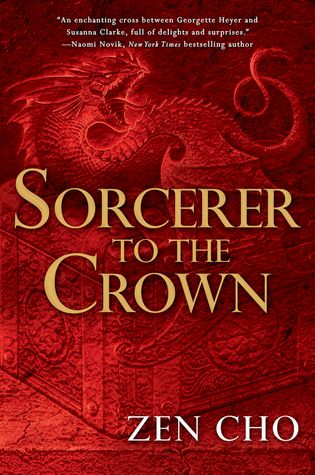
REVIEW: Sorcerer to the Crown by Zen Cho

Star Rating: **** 4/5 


Title: Sorcerer to the Crown
Author: Zen Cho
Genre: Fantasy
Subgenre: Magical Regency England (I admit I don't actually know what this subgenre is called ... )
Review by Silicon.
Magic and mayhem collide with the British elite in this whimsical and sparkling debut.

At his wit’s end, Zacharias Wythe, freed slave, eminently proficient magician, and Sorcerer Royal of the Unnatural Philosophers—one of the most respected organizations throughout all of Britain—ventures to the border of Fairyland to discover why England’s magical stocks are drying up.


But when his adventure brings him in contact with a most unusual comrade, a woman with immense power and an unfathomable gift, he sets on a path which will alter the nature of sorcery in all of Britain—and the world at large…

Intro


This was the first book in the Diverse SFF Book Club (#DSFFBookClub on twitter, join us!).

This is a Regency England setting with magic! Every now and then I get a hankering for some good high society magical England novels, and this book absolutely fits the bill. However, there is one little difference between those books and this one:

DIVERSE CHARACTERS.

(I was gonna hit the CAPSLOCK button sometime ...)

Characters


Our mains are Zacharias, a black man, and Prunella, a half-Indian woman. In a Regency England setting! Tell me, when have you read a Regency or Victorian England book with even ONE non-white character. Go on, I'll wait. (Gail Carriger's Finishing School has one black boy, but to me he's always felt very much a token ... a discussion for another post).

Cho writes the realities of being a PoC in a predominately white society excellently--both Zacharias' and Prunella's experiences really ring true. Both Zacharias and Prunella regularly have to deal with racist mindsets from people around them--sometimes even people on their side. I've now written a whole damn post on this topic so stay tuned for when that comes out! I really enjoyed reading a PoC perspective on this era in English history.

(BTW, take a look at the twitter account @medievalpoc. I love it. ACTUAL IMAGES of PoC in medieval times! In Europe, even!)

Cho also doesn't hesitate in exposing the sexism of society and how it affects her characters. Prunella, of course, is fully cognizant of the limitations society places on her--and her response it to reach in, grab, and twist society to MAKE her a place. She's determined, resourceful, and knows what she wants and isn't afraid to upset society's apple cart to get it!

As a contrast, Zacharias is a calm and thoughtful character determined to work for society's good despite his colleagues' rejection of him. He faces some of the worst machinations of the antagonists, and yet persists in doing his duty to the fullest extent.

I loved Zacharias' and Prunella's conversations that show how different their worldviews are.

Cho also includes a woman who, in my mind, is in a tight race with Prunella to be my favorite character. Mak Genggang, a Malaysian magician who wreaks havoc in London (both intentionally and unintentionally)! I loved her friendship with Prunella. She's definitely someone I'd want on MY side!

Plot


England's magical stocks are drying up, and the English Magicians are pissed. The task falls to Zacharias, Sorcerer Royal, to solve why. But his enemies are numerous and many hope for him to take a fall--even fatally.

Prunella is a woman with an astounding magical gift, and barely a friend in the world. Left bereft of protection yet possessing a secret of great magical value, she is determined to use her power to turn her situation around and secure for herself a place in a society that doesn't want her.

What happens when they meet?

The plot is not fast paced but not glacial either. There are several aspects to the political conundrum the characters face which come to light throughout the book, it's not a simple antagonist they face, and the problem isn't one-sided. However I did not feel particularly surprised by any twist save the viciousness of the other magicians.

I also felt some of the solutions were just a tad too neat for my twisty brain. While I enjoyed the magic system, a lot of it was hidden in academic language that is unexplained: such as obtuse spell names after people long dead. For me, it made it harder to really assess what the limits of magical power really were.

I was very pleased with the ending. NO SPOILERS. (And by now I hope you all know I can be very pleased with either a tragic or a happy ending so YOU KNOW NOTHING, JON SNOW *coughs*).

Writing Style


This book's style is marked by a beautiful use of language reminiscent of Jane Austen (I haven't read Heyer myself, but Cho was inspired by her novels!), very precise and absolutely period-perfect to my ear. Cho doesn't break voice even once, absolutely no modern phrases or anachronisms! Lots of snarky dialogue with double meanings, swift retorts, and imaginative metaphors! I adore snark, so I had a lot of fun reading along, especially with Prunella's conversations. The dialogues are insightful, deep, but also funny, bantering, and intelligent!


Magic System


I enjoyed the magic system--it's very scholarly in general, but with inclusion of familiars, magical artifacts, and capricious fairies. I liked the double-edged nature of the familiars a lot--beneficial, yes, but at what cost! It was really interesting to have a magic system where magic is inborn, but suppressed by society in women while encouraged in men. The magic school for girls shown in the beginning of the book shows how magic can be turned to harmful to the user, intentionally so. It was an interesting take on a naturally magical society.


Final Remarks


You may think that with all the "heavy" subjects I've mentioned that this is a dense brick of a novel. Not true. The story is very much in the style of magical Regency settings--lighthearted, whimsical, funny. That Cho is unafraid to include experiences of racism & sexism in such a novel is something I greatly appreciated. Yes, your characters can experience microaggressions but also have whimsical, funny magical escapades. This is not a heavy book at all.

I really enjoyed this novel and would HIGHLY recommend it to anyone who is fond of:

Sorcery & Cecilia by
Gail Carriger's Finishing School series (Book 1: Etiquette and Espionage)
Jane Austen
Georgette Heyer

Join in the discussion on Twitter using the #DSFFBookClub hashtag!